


For centuries, sailors have feared the stretch of ocean between southern South America and Antarctica. Today, thousands of travelers cross it each year on expedition ships, while scientists treat the same waters as one of the most valuable natural laboratories on Earth. The drake passage is not simply a notoriously rough sea route. It is a critical gateway for the Antarctic Circumpolar Current, a meeting place for major ocean systems, and an important window into changes affecting the global climate.
Recent research has added another layer to the story. Scientists have found that the boundaries of the Antarctic Circumpolar Current are shifting southward even while its overall transport remains comparatively stable. At the same time, new studies are examining carbon dioxide exchange, ocean chemistry, biological productivity, and increasingly dynamic eddies in the region.
Where the Drake Passage Is Located
The Drake Passage lies between the southern tip of South America and the Antarctic Peninsula, connecting the Atlantic and Pacific sectors of the Southern Ocean. Its position makes it one of the most strategically important ocean passages in the Southern Hemisphere. Unlike many major waterways, it is not enclosed by surrounding continents, allowing strong westerly winds to travel around Antarctica with relatively few interruptions.
That geography explains much of its reputation. Large swells can develop when powerful winds interact with an ocean that has an enormous uninterrupted fetch. The passage is also influenced by complex underwater ridges, continental shelves, fronts, and rapidly moving eddies. Together, these features produce constantly changing conditions rather than a single predictable pattern of waves and currents.
Why the Drake Passage Is So Rough
The passage’s legendary conditions begin with the Southern Ocean’s unusual geography. Strong westerly winds can circle Antarctica without encountering major land barriers, transferring enormous amounts of energy into the sea. When those winds meet opposing currents, changing atmospheric pressure, and deep ocean structures, the result can be large waves and rapidly changing sea states.
Yet the reputation for rough weather should not obscure the scientific reason researchers pay so much attention to this region. The passage acts as a natural bottleneck for the Antarctic Circumpolar Current, or ACC. Oceanographers can monitor a comparatively confined section of the current and use those observations to understand processes operating across the wider Southern Ocean.
The Antarctic Circumpolar Current Changes Everything
The Antarctic Circumpolar Current is the world’s only current that flows completely around a continent. Moving generally eastward, it links the Pacific, Atlantic, and Indian Ocean systems while transporting enormous quantities of water, heat, nutrients, and dissolved carbon. Because the current crosses the passage, this relatively narrow area provides scientists with an unusually important monitoring point.
One major measurement program using instruments deployed from 2007 to 2011 estimated the mean total transport through the passage at about 173.3 Sverdrup. One Sverdrup represents one million cubic meters of water transported per second. That estimate was roughly 30 percent higher than the older benchmark of 134 Sverdrup commonly used in climate and circulation studies.
Why Scientists Treat It as a Climate Laboratory
The significance of the region extends far beyond Antarctica. The Southern Ocean absorbs and redistributes heat and carbon while helping connect the world’s major ocean basins. Because of that role, changes in circulation can influence climate processes far from the Antarctic Peninsula.
The passage also contains deep-reaching ocean fronts where temperature, salinity, density, and biological conditions can change over relatively short distances. Historical observations have identified several major fronts within the Antarctic Circumpolar Current, including the Subantarctic Front and Polar Front. Their positions can shift, creating a moving boundary between different water masses.
A Major 2025 Finding About Ocean Current Movement
One of the most important recent developments came from research published in Nature Climate Change in November 2025. Scientists examining satellite observations found that Southern Ocean westerly winds have intensified and shifted toward Antarctica over recent decades. Surprisingly, however, the total transport of the Antarctic Circumpolar Current through the passage has remained relatively stable.
The study found that the northern boundary of the current moved southward over the past three decades, with the fastest migration reaching up to 1.1 degrees of latitude per decade in the Southeast Pacific. That distinction matters. A current can retain a broadly similar transport while its geographic structure and position change, potentially altering where heat, nutrients, and biological activity are concentrated.
Ocean Carbon Is Becoming Another Focus
Carbon dioxide exchange is another reason the region has attracted renewed scientific attention. The ocean does not simply absorb carbon dioxide uniformly. Local circulation, biology, temperature, nutrients, upwelling, and water chemistry can determine whether a particular area acts as a carbon sink or source at a given time.
A 2025 study examining the passage and northern Antarctic Peninsula found strong regional differences in the factors controlling the marine carbonate system. Researchers reported that oceanic areas were significantly influenced by phosphate concentrations and energetic eddies, while coastal processes also played important roles. Another study found contrasting carbon dioxide exchange north and south of the Polar Front, highlighting how dynamic the region can be.
Eddies Make the Water Far More Dynamic
It is tempting to imagine the Southern Ocean as a giant river flowing steadily around Antarctica. In reality, the circulation is filled with swirling structures called mesoscale eddies. These rotating bodies of water can transport heat, salt, nutrients, and biological material across boundaries that might otherwise appear relatively stable.
The complex underwater geography around the passage helps generate and steer these features. Researchers have documented strong eddy activity around major topographic structures, including the Shackleton Transverse Ridge. Such activity can influence the movement of shelf waters and affect the exchange between warmer offshore waters and colder Antarctic environments.
The History Behind Its Famous Name
The history of the passage is closely tied to the age of exploration. Ferdinand Magellan’s expedition demonstrated a navigable route through the Strait of Magellan in the early sixteenth century, but ships eventually learned that the waters farther south offered another connection between the Atlantic and Pacific.
The passage is commonly associated with English privateer Sir Francis Drake, whose circumnavigation expedition reached the Pacific after navigating the southern end of South America in 1578. Historical naming remains more complicated than the familiar label suggests. Some Spanish sources and later geographic discussions have associated the waters with Francisco de Hoces, who was reportedly pushed south of the Strait of Magellan during a voyage in 1525.
Why Antarctica Cruises Cross It
For modern travelers, the passage is often the gateway to an Antarctic expedition. Many voyages begin in Ushuaia, Argentina, then head south toward the Antarctic Peninsula. Crossing the open ocean becomes part of the experience before passengers reach the ice, mountains, penguin colonies, and coastal waters of Antarctica.
The scale of Antarctic tourism has grown dramatically over the past decade. Argentina’s geographic authorities reported that 104,821 passengers reached Antarctica through Ushuaia during the 2024–25 season, using 51 vessels across 421 voyages. Although that figure includes different types of Antarctic traffic, it demonstrates the importance of the southern Argentine port as a major gateway to the region.
What Travelers Should Expect During a Crossing
Conditions can vary substantially from one voyage to another. Some crossings are comparatively calm, while others feature strong winds, rolling swells, and significant ship movement. Weather systems can change quickly, so passengers should not assume that a forecast made several days earlier will accurately describe conditions at the moment of crossing.
Experienced expedition operators prepare ships and passengers for those variations. Travelers can also reduce discomfort by following crew instructions, securing loose belongings, using handrails, staying hydrated, and considering seasickness medication after consulting an appropriate healthcare professional. The goal is not to eliminate the character of the journey but to make the crossing safer and more manageable.
Wildlife Beneath the Surface
The waters around the passage support an extraordinary food web. Phytoplankton form the foundation of much of the Southern Ocean’s marine productivity, while krill provide an essential food source for fish, seabirds, penguins, seals, and whales. Ocean fronts and eddies can concentrate nutrients and influence where biological productivity becomes particularly intense.
The connection between physical oceanography and wildlife is therefore direct. When currents transport nutrient-rich waters or create favorable conditions for plankton growth, those changes can affect organisms farther up the food chain. Scientists studying the passage are consequently interested not only in currents themselves but also in how changing physical conditions may reshape Antarctic ecosystems.
Why the Passage Matters to Global Climate Models
Climate models need accurate information about ocean circulation because water transports heat and carbon over enormous distances. The Antarctic Circumpolar Current is especially important because it connects three major ocean basins and interacts with atmospheric circulation around Antarctica.
The long-term observations collected through the passage have therefore become valuable benchmarks for testing and improving numerical models. Researchers have used ship observations, moored instruments, satellite measurements, hydrographic surveys, and other technologies to investigate transport and variability. The challenge is that no single observation method captures every scale of motion, from broad current shifts to short-lived eddies.
Technology Is Transforming Ocean Monitoring
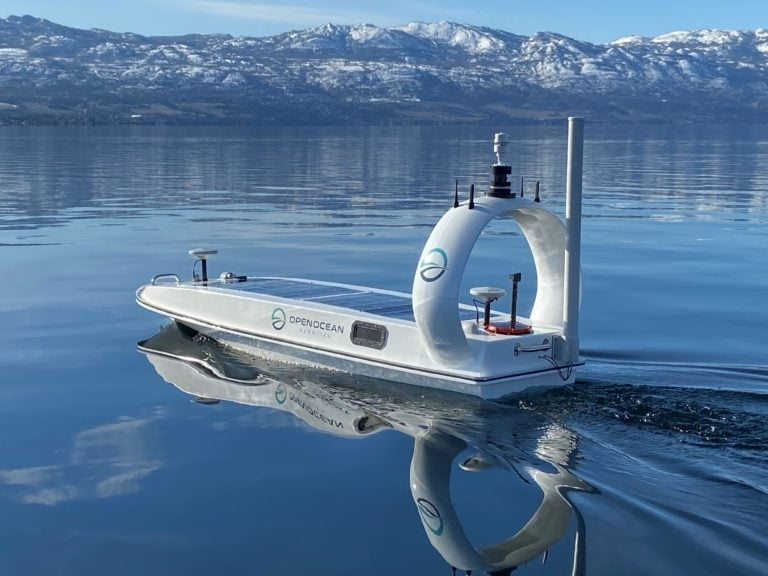
Modern oceanography is increasingly combining traditional ship surveys with satellite altimetry, autonomous instruments, moorings, and high-resolution computer models. This combination gives researchers a much more detailed picture of how the Southern Ocean behaves than was possible during the early days of oceanographic exploration.
Satellite observations are particularly valuable for tracking changes in sea-surface height and identifying the position of major current fronts. Meanwhile, instruments placed in the water can measure temperature, salinity, velocity, and other properties beneath the surface. Together, these tools help researchers distinguish temporary fluctuations from longer-term changes.
What Climate Change Could Mean for the Region
Climate change adds urgency to this research. The Southern Ocean sits at the intersection of atmospheric warming, changing wind patterns, melting ice, ocean circulation, and biological responses. Even when a major current’s total transport remains stable, a shift in its position can change interactions with neighboring water masses and continental shelves.
The recent evidence of a southward shift in the current’s northern boundary illustrates why scientists increasingly look beyond simple questions such as whether a current is becoming stronger or weaker. Its location, vertical structure, eddies, fronts, and interaction with atmospheric winds can all matter. Future research will likely focus increasingly on these regional details rather than relying on a single measurement of current strength.
What the Future May Bring
The next phase of research is likely to combine longer observational records with increasingly sophisticated ocean models. Scientists need to understand whether recent changes represent temporary variability, persistent trends, or part of a larger reorganization of Southern Ocean circulation.
Carbon cycling will remain another major research priority. The 2025 studies showing contrasting carbon dioxide behavior across different parts of the region demonstrate that broad averages can hide important local processes. Better measurements could improve estimates of how the Southern Ocean exchanges carbon with the atmosphere and how those exchanges respond to changing circulation and biology.
Responsible Tourism Is Becoming More Important
Growing Antarctic tourism creates an interesting contradiction. The passage helps people experience one of the planet’s most remote environments, but increased access also raises questions about environmental responsibility. Tourism organizations and Antarctic Treaty participants have developed rules and operational practices intended to reduce risks associated with visits to fragile polar environments.
Recent visitor numbers show why the discussion matters. IAATO reported more than 100,000 Antarctic visitors in recent seasons, with 118,491 visitors recorded for 2024–25 according to its latest reported figures. Continued growth makes biosecurity, wildlife protection, vessel management, and responsible visitor behavior increasingly important.
Practical Tips for Understanding the Drake Passage
For travelers, the best preparation starts with realistic expectations. Conditions can be unpredictable, and a smooth crossing on one voyage does not guarantee similar conditions on another. Packing appropriate layers, waterproof outer clothing, secure footwear, and personal seasickness supplies can make the journey considerably more comfortable.
For readers following the science, it helps to distinguish between weather and ocean circulation. A rough crossing is not necessarily evidence that the Antarctic Circumpolar Current has become stronger. Likewise, a calm voyage does not mean the broader Southern Ocean is unusually quiet. Researchers evaluate long-term measurements, current transport, temperature, salinity, wind stress, eddy activity, and biological indicators to identify meaningful trends.
Key Takeaways
The passage is far more than a difficult stretch of ocean between two continents. It is one of the most important observation points for understanding the Antarctic Circumpolar Current and the wider Southern Ocean. Its unusual geography allows scientists to study an immense circulation system through a comparatively concentrated corridor.
Recent research has also changed the conversation. Evidence published in 2025 indicates that the northern boundary of the Antarctic Circumpolar Current has shifted southward while overall transport through the passage has remained comparatively stable. Meanwhile, studies of carbon dioxide exchange and ocean chemistry are revealing strong regional differences within the same general marine environment.
For travelers, the lesson is equally simple: the famous rough crossing is only one part of the story. Beneath the waves lies a complex system influencing climate, carbon, marine ecosystems, scientific research, and Antarctic tourism. Understanding that hidden world makes the journey south far more meaningful.
Conclusion
The drake passage remains one of the world’s most dramatic ocean crossings, but its importance reaches far beyond adventure travel. It is a critical gateway for a current that links three major ocean basins, a natural laboratory for climate research, and a sensitive environment where changes in circulation, chemistry, and biology can reveal broader shifts in the Southern Ocean.
As satellite observations, autonomous instruments, and long-term monitoring programs continue to improve, scientists will gain an increasingly detailed view of this remote region. For travelers, researchers, and anyone interested in Earth’s changing climate, the message is clear: the next time you see a ship heading south across these famous waters, remember that beneath it lies one of the planet’s most important climate systems. Continue exploring the science behind the Southern Ocean, because understanding this remote passage may help us understand changes far beyond Antarctica.
Frequently Asked Questions
What is the Drake Passage?
The Drake Passage is the ocean region between southern South America and the Antarctic Peninsula, connecting the Atlantic and Pacific sectors of the Southern Ocean.
Why is the Drake Passage so rough?
Its exposed position allows powerful Southern Ocean winds to travel around Antarctica without major land barriers, generating large and rapidly changing waves.
How important is the Drake Passage to climate science?
It is a key monitoring location for the Antarctic Circumpolar Current, which connects major ocean basins and transports heat, nutrients, and carbon.
How long does it take to cross the Drake Passage?
Crossing times vary by vessel, route, and weather, but expedition voyages commonly spend roughly one to two days traveling across the passage in each direction.
Can the Drake Passage be calm?
Yes. Although it has a reputation for severe conditions, crossings can sometimes be surprisingly smooth. Weather and sea state vary considerably between voyages.
What animals live around the Drake Passage?
The broader region supports krill, seabirds, penguins, seals, whales, and numerous microscopic organisms that form the foundation of the Southern Ocean food web.
Is the Drake Passage changing because of climate change?
Researchers have identified important changes in Southern Ocean winds and the position of current boundaries. Recent research found a southward shift in the northern boundary of the Antarctic Circumpolar Current while its transport through the passage remained comparatively stable.
You May Also Read: Poplar Tree