

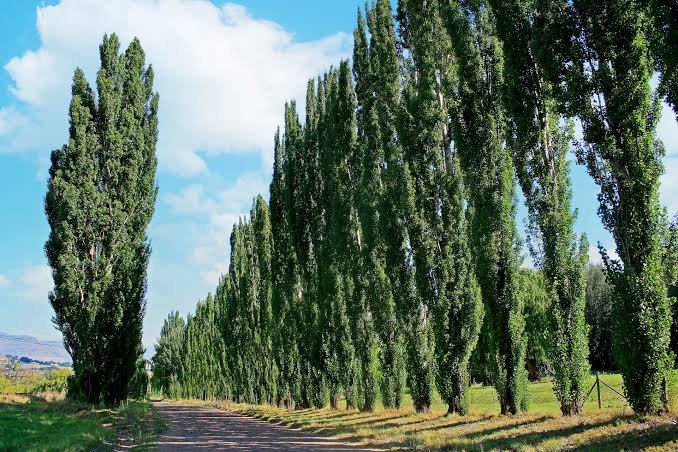
A poplar tree can grow from a small planting into a towering landmark surprisingly quickly, but its story is far bigger than rapid growth. Across North America, Europe, and parts of Asia, poplars have shaped landscapes, supported timber production, stabilized soils, provided wildlife habitat, and increasingly attracted attention in discussions about climate resilience. Their speed is also their greatest appeal and one of their biggest management challenges. As forestry, agriculture, urban planning, and carbon management evolve, researchers and landowners are taking a closer look at what poplars can—and cannot—deliver.
What Makes a Poplar Tree So Important
Poplars belong to the genus Populus, a group of deciduous trees that includes cottonwoods, aspens, and several commercially important hybrids. They are generally recognized for rapid juvenile growth, relatively soft wood, and their ability to establish in suitable soils. Depending on the species and environment, poplars can become large trees with broad crowns and extensive root systems. Their leaves often tremble noticeably in the wind, creating the familiar rustling sound associated with many poplar-dominated landscapes.
The genus has an unusually broad geographic range, which explains why the word “poplar” can refer to several quite different trees. Species such as eastern cottonwood, black poplar, balsam poplar, and white poplar have different ecological preferences and management characteristics. Hybrid poplars add another layer because breeders have selected combinations of traits such as rapid growth, disease resistance, and adaptability. Understanding the species or hybrid involved is therefore essential before making claims about growth, longevity, wood quality, or environmental performance.
A Brief History of Poplars in Human Landscapes
Poplars have a long relationship with people. Their wood has been used for boards, boxes, matches, paper products, and other applications where lightweight and relatively workable timber is valuable. In Europe, black poplar became an important landscape and riparian species, while North American cottonwoods grew naturally along rivers and floodplains. Their ability to establish rapidly on suitable disturbed ground helped them become familiar components of changing landscapes.
Human cultivation later expanded the role of the genus. Farmers and foresters began selecting and propagating trees with desirable growth characteristics, while horticultural varieties became popular for parks, streets, windbreaks, and property boundaries. Hybridization accelerated those efforts, producing trees intended for particular climates or industrial purposes. This history helps explain why modern discussions about poplars often cross several fields at once, from conservation biology to commercial forestry and urban landscaping.
Why Poplars Grow So Quickly
Rapid growth is one of the defining characteristics of many poplar species and hybrids. During favorable growing seasons, young trees can put on substantial height and biomass because they efficiently capture sunlight and produce new shoots and leaves. Their growth rate depends heavily on water availability, soil fertility, temperature, genetics, competition, and planting density, so no single annual growth figure applies to every poplar.
That variability is important for landowners. A fast-growing cultivar planted on fertile, well-watered ground can perform very differently from the same genetic material on dry or compacted soil. Poplars generally perform best when their basic requirements are met rather than being treated as universally tolerant trees. Consequently, site assessment should come before planting. Drainage, available moisture, expected mature size, local climate, and proximity to buildings or underground infrastructure all deserve attention.
The Major Types of Poplar Worth Knowing
The genus Populus contains numerous species, but several are especially familiar. Eastern cottonwood is a large North American tree associated with river systems and floodplains. Balsam poplar occurs across northern parts of North America and is adapted to colder environments. Black poplar has a long history in Europe and western Asia, while white poplar is recognizable for its pale or silvery leaf undersides.
Aspens also belong to the genus and are sometimes discussed alongside poplars even though they have distinctive ecological and visual characteristics. Hybrid poplars are particularly significant in commercial forestry because breeders can combine traits from different parent species. For anyone buying or planting a tree, the precise botanical identity matters. A nursery label that simply says “poplar” may not provide enough information to predict mature height, root behavior, disease susceptibility, or suitability for a particular site.
Poplar Wood and the Forestry Industry
Poplar wood is generally lightweight and relatively easy to process. Depending on species and growing conditions, it can be used for pulp, paper, panels, boxes, pallets, veneer, and other products. Its rapid growth makes certain poplar hybrids attractive for short-rotation forestry, where the objective is to produce usable biomass within a comparatively short period rather than wait for the long rotations associated with some hardwoods.
The economics, however, depend on local markets. A tree that grows quickly does not automatically produce high-value timber. Wood density, stem form, disease resistance, harvesting costs, transportation, and nearby processing facilities all influence profitability. Forestry operations therefore assess poplars as part of a wider production system. The strongest commercial applications often focus on biomass, pulp, engineered wood, or specialized products rather than assuming every large poplar will become premium saw timber.
Poplars and the Carbon Conversation
Fast-growing trees naturally attract interest in carbon management because rapid biomass accumulation can remove carbon dioxide from the atmosphere through photosynthesis. Poplar plantations can therefore contribute to biological carbon storage while producing renewable material. Their climate value is greatest when the trees are healthy, the site remains productive, and the resulting wood products or ecosystem stores retain carbon for meaningful periods.
However, tree planting should not be presented as a simple substitute for reducing fossil-fuel emissions. Carbon accounting must consider the entire system, including land preparation, fertilizer, irrigation, harvesting, transportation, decomposition, and what happens after wood products reach the end of their useful life. Soil carbon also matters. A responsible climate assessment therefore examines both carbon uptake and emissions rather than focusing only on the speed at which trees grow.
The Role of Poplars in River and Wetland Ecosystems
Natural poplar relatives are particularly important near rivers and floodplains. Cottonwoods and other riparian species can establish on freshly deposited sediment following floods, creating vegetation that helps shape developing river corridors. Their roots can stabilize portions of riverbanks, while their branches and fallen material provide habitat and organic matter for other organisms.
These benefits depend on natural hydrology. A riparian forest cannot be evaluated simply by counting trees because river flow, flooding frequency, groundwater levels, and sediment movement influence whether the ecosystem remains healthy. Development, dams, channel modification, invasive species, and altered water regimes can change the conditions under which poplars regenerate. Conservation efforts increasingly focus on restoring ecological processes rather than planting trees in isolation.
Wildlife Benefits of Poplar-Dominated Areas
Poplars support a wide range of organisms. Their leaves, flowers, bark, buds, and associated insects provide food for different species, while mature trees create nesting and shelter opportunities. In riparian landscapes, the forest structure formed by poplars can connect aquatic and terrestrial habitats. Dead and fallen wood can also become part of the ecological cycle, supporting fungi, insects, and other decomposers.
Aspen stands demonstrate another important ecological relationship. In parts of North America, aspen forests support diverse plant communities and provide habitat for mammals and birds. Their value is therefore not limited to the living tree. A healthy forest contains trees of different ages, fallen material, understory vegetation, and natural disturbances. Maintaining that structural diversity can be more beneficial for biodiversity than managing every stand as a uniform collection of trees.
Poplars in Cities: Benefits and Problems
Urban planners sometimes consider poplars for their rapid growth and ability to provide shade. A well-positioned tree can reduce exposure to direct sunlight, improve the appearance of streets and parks, and contribute to urban biodiversity. Trees can also intercept rainfall and influence local microclimates, although the size of these benefits varies with canopy cover, weather, and surrounding surfaces.
Yet poplars are not ideal for every urban location. Some species develop extensive root systems, and certain trees produce abundant seeds that can become a nuisance. Branch breakage, leaf litter, weak wood in some varieties, and susceptibility to particular pests or diseases can create maintenance concerns. Planting decisions should therefore consider mature dimensions, local regulations, underground utilities, sidewalks, drainage systems, and the characteristics of nearby buildings.
Water Requirements and Soil Conditions

Water availability is one of the most important factors influencing poplar performance. Many species naturally occur in environments with reliable moisture, particularly river valleys and floodplains. Fast growth requires substantial physiological activity, and adequate water helps trees maintain photosynthesis and transport nutrients through their tissues. A tree planted in dry conditions may survive while growing far more slowly than expected.
At the same time, soil must provide suitable physical conditions. Compacted ground can restrict root development, while prolonged waterlogging may damage species that are not adapted to saturated soils. Before planting, gardeners and land managers should examine drainage, soil texture, available moisture, and the expected seasonal water pattern. Matching the right species or hybrid to the site is usually more effective than attempting to force a poorly suited variety to thrive.
Common Diseases and Pest Pressures
Poplars can be affected by fungal diseases, insects, and other biological stresses. Leaf rusts, cankers, borers, and defoliating insects are among the problems that can occur, although vulnerability varies by species and cultivar. Stress caused by drought, poor soil, mechanical injury, or unsuitable planting conditions can make trees more vulnerable to secondary problems.
Disease management works best when it begins with prevention. Selecting appropriate planting material, maintaining adequate growing conditions, monitoring trees regularly, and avoiding unnecessary injury can reduce risk. When symptoms appear, identifying the actual cause matters because yellow leaves, dead branches, holes, and bark damage can have very different origins. Professional diagnosis can be particularly valuable for valuable landscape trees or large plantings where incorrect treatment could waste money or worsen the problem.
Why Hybrid Poplars Continue to Attract Attention
Hybrid poplars have become an important research subject because they can combine rapid growth with traits inherited from different parent species. Forestry programs have investigated hybrids for biomass production, pulpwood, ecological restoration, and other applications. Their performance can be impressive under favorable conditions, particularly where adequate water and nutrients are available.
Researchers are also interested in improving resilience. Future breeding programs may focus more heavily on drought tolerance, disease resistance, cold adaptation, and efficient nutrient use as environmental conditions change. This is especially relevant because a tree bred for rapid growth under ideal conditions may perform poorly when heat, drought, pests, or irregular precipitation become more common. The next generation of improved poplars will likely be judged on resilience as much as speed.
Climate Change Could Alter Where Poplars Thrive
Changing climate conditions are creating new questions for forestry and conservation. Warmer temperatures may lengthen growing seasons in some regions, potentially increasing productivity where water remains sufficient. However, higher temperatures can also increase evaporation and drought stress. A longer growing season is not automatically beneficial if trees cannot obtain enough moisture to support that additional growth.
Extreme weather adds further uncertainty. Floods, heat waves, droughts, storms, wildfire, and changing pest distributions can all affect forest health. Because poplars occupy many different environments, responses will vary geographically. Researchers and land managers therefore increasingly emphasize adaptive planning: selecting appropriate genetic material, diversifying plantings, monitoring conditions, and avoiding assumptions that past performance guarantees future results.
Poplars and Sustainable Land Management
Poplar plantations can fit into sustainable land-management strategies when their ecological and economic impacts are assessed carefully. Short-rotation systems may produce renewable biomass on suitable land, potentially reducing pressure on slower-growing natural forests for certain products. Riparian plantings can also support habitat and erosion control when they are designed around natural water systems.
Nevertheless, sustainability requires more than planting fast-growing trees. Land managers must consider biodiversity, water use, soil health, chemical inputs, harvesting practices, and the landscape surrounding a plantation. Monocultures can be more vulnerable to certain pests and diseases than diverse plant communities. A balanced strategy can combine productive trees with buffer zones, mixed habitats, native vegetation, and responsible monitoring.
What the Future Could Mean for Poplar Research
The next phase of poplar research is likely to focus on resilience, genetics, carbon accounting, and multifunctional landscapes. Scientists can now study tree genetics and environmental responses with increasingly sophisticated techniques, allowing them to identify characteristics associated with growth, drought response, disease resistance, and resource efficiency. That knowledge may help breeders develop varieties suited to specific future climates rather than relying only on historical performance.
There is also growing interest in using trees as part of broader climate and agricultural strategies. Poplars may have roles in agroforestry, degraded-land restoration, wastewater management research, bioenergy, and carbon-conscious production systems. Their future value will depend on where they are planted and what objective they serve. The strongest projects are likely to treat poplars not as a universal solution but as one tool within a carefully designed ecological and economic system.
Practical Advice Before Planting a Poplar
Anyone considering a poplar should begin by identifying the species or cultivar. Mature size, root characteristics, disease resistance, climate tolerance, and growth rate can differ substantially. Next, examine the planting location. Keep large trees away from structures and infrastructure where roots or falling branches could create problems, and check local guidance before planting near utility corridors or property boundaries.
Long-term maintenance should also be part of the decision. Fast growth means the tree may require earlier pruning or more space than a slower-growing ornamental species. Monitor young trees for moisture stress and inspect mature specimens for dead branches, trunk injuries, cavities, or signs of disease. When a tree becomes unusually large or stands near buildings, roads, or public areas, an assessment by a qualified arborist can help identify risks before they become expensive problems.
Key Takeaways
Poplars are a diverse group of trees with major ecological, commercial, and cultural importance. Their rapid growth makes them valuable for shade, timber, biomass, restoration, and some carbon-management applications, while their presence in river corridors and forests supports wildlife and landscape stability.
However, fast growth does not make every poplar suitable for every location. Water availability, soil conditions, mature size, root behavior, disease resistance, and local climate should guide planting decisions. Different species and hybrids can behave very differently, making correct identification particularly important.
Climate change is likely to reshape the opportunities and risks associated with poplars. Longer growing seasons may benefit trees in some regions, while drought, heat, pests, and extreme weather could create new pressures. Future breeding and management will therefore need to prioritize resilience alongside productivity.
Conclusion
The poplar’s reputation for fast growth only tells part of the story. These trees connect forestry, river ecology, wildlife habitat, urban planning, renewable materials, and climate research in ways that make them increasingly relevant to modern land management. Their strengths are considerable, but so are the limitations that become visible when the wrong species is planted in the wrong environment.
As climate conditions change and demand grows for renewable materials and resilient landscapes, poplars are likely to remain subjects of research and practical experimentation. Their future will depend on smarter species selection, stronger ecological planning, responsible forestry, and realistic expectations about what trees can accomplish. Whether you are researching forestry, choosing a landscape tree, or following developments in climate-conscious agriculture, understanding poplars is a useful step toward understanding the changing relationship between forests and people
Frequently Asked Questions
What is a poplar tree?
A poplar is a deciduous tree belonging to the genus Populus, which includes poplars, cottonwoods, and aspens.
How fast does a poplar grow?
Growth varies by species, genetics, soil, water, and climate, but many poplars are known for relatively rapid growth.
Are poplar trees good for the environment?
They can provide habitat, shade, carbon storage, soil stabilization, and other benefits when planted in suitable locations.
Do poplar trees need lots of water?
Many species perform best with reliable moisture, although water requirements vary among species and growing conditions.
Are poplar roots invasive?
Some poplars can develop extensive root systems, so planting location should be selected carefully, particularly near infrastructure.
You May Also Read: Montevideo