

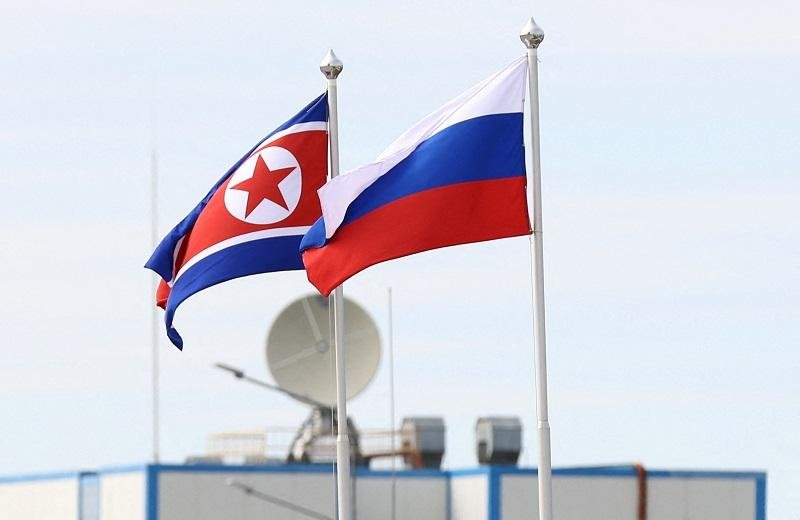
A flag can be more than a piece of fabric. It can represent history, political ideas, national identity, and the hopes of millions of people. The north korea flag is one of the world’s most recognizable national symbols, featuring bold colors, a red star, and a design created during one of the most dramatic periods in modern Korean history. Introduced after the division of the Korean Peninsula, it became closely connected with the identity of the Democratic People’s Republic of Korea (DPRK).
Behind its simple appearance lies a complex story involving independence movements, the aftermath of World War II, ideological changes, and the creation of a new state. From official ceremonies in Pyongyang to international sporting events, the flag continues to represent North Korea’s political system and national narrative. Understanding its design provides a deeper look into how symbols influence history and society.
The Historical Background of the North Korean Flag
The origins of the north korea flag are connected to the political changes that followed Japan’s surrender in 1945. After decades of Japanese colonial rule, Korea was divided into northern and southern occupation zones controlled by the Soviet Union and the United States. This division eventually led to the establishment of two separate governments with different political systems.
Before the creation of North Korea, the Korean Peninsula shared traditional symbols, including the Taegeukgi, which later became the national flag of South Korea. However, the northern government sought a new national symbol that reflected its revolutionary identity and political direction.
The current design was introduced in 1948, shortly before the formal establishment of the Democratic People’s Republic of Korea. It replaced earlier Korean symbols and introduced colors and imagery associated with the new socialist state.
The creation of the flag was not only an artistic decision but also a political statement. It represented a break from previous traditions and marked the beginning of a separate national identity in northern Korea.
Design Elements of the North Korean Flag
The north korea flag has a distinctive horizontal design made up of red, white, and blue sections. A wide red stripe dominates the center, while thinner white stripes separate it from blue bands at the top and bottom. Near the left side of the red section is a white circle containing a red five-pointed star.
Each part of the design carries symbolic meaning. The red color is associated with revolutionary traditions, the sacrifices of independence fighters, and the strength of the Korean people according to North Korean interpretations. The white sections are connected with purity, national unity, and cultural heritage, while blue represents sovereignty, peace, and friendship.
The red star is one of the most recognizable symbols in socialist and communist traditions. In North Korea, it represents revolutionary ideology and the principles of the state. The placement of the star inside a white circle gives the design a strong visual identity that separates it from many other national flags.
Unlike flags that focus mainly on historical symbols such as animals, landscapes, or royal imagery, the North Korean design emphasizes political history and revolutionary identity.
What the Colors of the North Korean Flag Represent
Colors often communicate national values, and the north korea flag uses three major colors to express important ideas. The combination of red, white, and blue connects the country’s modern political identity with broader Korean traditions.
Red is the most dominant color in the design. It represents revolutionary spirit, national struggle, and the sacrifices made during Korea’s independence movement. In official interpretations, red reflects the unity and determination of the Korean people.
White has deep cultural importance in Korean history. It is often associated with purity, honesty, and the shared cultural heritage of the Korean people. Historically, white clothing was common in Korea, leading to the description of Koreans as a “white-clad people.”
Blue represents peace, independence, and international friendship. While the flag has strong political symbolism, the blue sections also communicate the idea of national sovereignty and peaceful development.
Together, these colors create a balance between revolutionary identity, cultural tradition, and national aspirations.
The Red Star and Its Political Meaning
The five-pointed star is one of the most significant features of the north korea flag. Across many countries, the red star has historically been associated with socialist and communist movements, especially during the 20th century.
In North Korea, the star represents the revolutionary path of the state and the ideology that shaped its government after 1948. It connects the national symbol with the country’s political history and the leadership structure that developed after independence.
The star’s position inside a white circle creates a strong visual contrast. Designers used this arrangement to make the symbol immediately recognizable even from a distance.
National flags often serve as tools of communication, and the red star allows the North Korean government to express its political identity through a simple but powerful image.
How the North Korean Flag Differs From South Korea’s Flag
The history of the Korean Peninsula is reflected in the differences between the two national flags. While both countries share Korean cultural roots, their flags represent different political developments after the division of Korea.
The South Korean flag, known as the Taegeukgi, features a white background with a red and blue Taegeuk symbol and four black trigrams. It focuses on traditional Korean philosophy and concepts of balance and harmony.
The north korea flag, by contrast, emphasizes revolutionary history and socialist symbolism through its red stripe and star. The different designs illustrate how two nations developed separate identities despite sharing centuries of cultural history.
These differences have made flags an important part of discussions about Korean identity, reunification, and international relations.
The Role of the North Korean Flag in Society

Inside North Korea, the north korea flag appears in government buildings, schools, military events, sports competitions, and official ceremonies. It is a highly visible symbol used to promote national unity and loyalty.
Public displays of the flag are carefully regulated, and its image is closely connected with state events. During national holidays and political gatherings, large flag displays often accompany ceremonies designed to celebrate national achievements.
The flag also plays an important role in education. Students learn about national symbols from an early age, including the meaning of colors and the importance of the country’s historical events.
Outside North Korea, the flag often attracts international attention because of the country’s unique political system and its place in global affairs.
The North Korean Flag in International Events
Sports and international gatherings have provided some of the most visible appearances of the north korea flag. Athletes representing North Korea carry the flag during Olympic Games, world championships, and other competitions.
Sports events have sometimes created moments of cooperation between North and South Korea. In some cases, athletes from both nations have participated under a unified Korean flag, symbolizing hopes for improved relations. However, disagreements over political details have also prevented joint appearances at certain events.
These moments demonstrate how flags can become symbols beyond national borders. They can represent competition, diplomacy, identity, and political discussions all at the same time.
For international audiences, seeing the North Korean flag often provides a visual introduction to the country’s history and political structure.
Historical Changes and Standardization of the Flag
Although the main design of the north korea flag has remained consistent since 1948, some technical details have changed over time. Regulations have standardized aspects such as proportions and official presentation.
The stability of the design reflects the importance of national symbols in North Korea. Unlike countries that frequently change flags after political transitions, North Korea has maintained this design as a continuous representation of the state.
The flag’s survival across decades of political changes shows how powerful symbols can become deeply connected with national identity.
Historians studying flags often examine these changes because they reveal how governments use visual symbols to communicate political messages and historical narratives.
Cultural and Global Interest in the North Korean Flag
The north korea flag has attracted interest from historians, travelers, researchers, and people studying international relations. Because North Korea is one of the world’s most politically unique countries, its symbols often receive attention beyond traditional flag studies.
Researchers analyze the flag alongside other national symbols, including the national emblem, monuments, and official ceremonies. Together, these elements provide insight into how North Korea presents itself domestically and internationally.
Tourists visiting North Korea often encounter the flag throughout their journey because it appears in public spaces, museums, and official locations.
Online education and global media have also increased interest in understanding the meaning behind national symbols.
Future Importance of the North Korean Flag
As international relations continue to change, the north korea flag will likely remain an important symbol of national identity. Whether discussions focus on diplomacy, security, culture, or possible future developments on the Korean Peninsula, the flag will continue representing the country.
Future generations may study the flag as an example of how political movements use symbols to build national narratives. Its design demonstrates how colors and shapes can communicate complex historical ideas.
Even as technology changes how people interact with information, national symbols remain powerful tools for understanding countries and cultures.
The continued global interest in North Korea means its flag will remain a subject of discussion among historians, political scientists, and international observers.
Key Takeaways
- The north korea flag was officially adopted in 1948 after the creation of the DPRK.
- Its design includes red, white, and blue colors with a red star inside a white circle.
- Red represents revolutionary traditions, while blue and white reflect sovereignty, peace, and cultural identity.
- The flag plays a major role in North Korea’s political and national symbolism.
- It remains one of the most recognizable symbols associated with the Korean Peninsula.
Conclusion
The north korea flag is more than a national emblem; it is a visual representation of history, ideology, and identity. Every element, from the red star to the colored stripes, carries meanings connected to the country’s formation and political development.
Understanding the story behind this flag provides valuable insight into North Korea’s history and its place in global affairs. National symbols often reveal how countries view themselves, and this flag remains one of the clearest examples of how design can communicate powerful messages.
Continue exploring world flags, cultural symbols, and historical stories to discover how nations express their identities through the images they display.
Frequently Asked Questions
When was the North Korean flag adopted?
The North Korean flag was officially adopted in September 1948 after the establishment of the Democratic People’s Republic of Korea.
What do the colors of the North Korean flag mean?
The colors represent revolutionary history, purity, cultural identity, sovereignty, and peace.
What does the red star on the North Korean flag represent?
The red star represents revolutionary ideology and socialist traditions.
Why did North Korea change from the traditional Korean flag?
North Korea introduced a new flag to represent its separate political identity after the division of Korea.
What is the design of the North Korean flag?
It features a red central stripe, blue bands, white borders, and a red star inside a white circle.
Is the North Korean flag used internationally?
Yes, it appears at international events such as sports competitions and diplomatic occasions.
You May Also Read: Toads