

A dichotomous key is a scientific tool that helps people identify unknown organisms, objects, plants, animals, rocks, and other specimens through a series of carefully designed choices. It works by presenting two opposite statements at each step, allowing users to compare specific characteristics and eliminate incorrect options. This identification method is widely used in biology, environmental science, education, and field research because it makes classification easier and more organized.
The term “dichotomous” means divided into two parts, which explains how this tool functions. Every step of a dichotomous key provides two possible choices based on visible features such as shape, color, size, structure, texture, or other physical traits. By selecting the statement that matches the specimen, users move forward until they discover the correct name or category of the item they are studying.
How Does a Dichotomous Key Work?
A dichotomous key works by guiding users through a step-by-step identification process. The first step usually begins with broad characteristics that separate large groups into smaller categories. For example, a plant key may start by asking whether a plant has flowers or does not have flowers. Each answer leads to another question that focuses on more detailed features.
The accuracy of a dichotomous key depends on careful observation and correct choices. Users must carefully examine the specimen before selecting an option because one incorrect answer can lead to the wrong result. Scientists and students use these keys because they provide a logical method for identifying organisms without needing advanced equipment or complicated analysis.
When using a dichotomous key, the user follows a simple path from general information to specific identification. Each pair of statements reduces the number of possible choices until only one final answer remains. This process makes classification easier for beginners while also providing a valuable research method for professionals who study biodiversity and natural environments.
Types of Dichotomous Keys
There are several types of dichotomous keys used in different situations depending on the needs of students, scientists, and researchers. The most common type is the traditional written key, which uses numbered statements and directs users from one step to another. This format has been used for many years in biology textbooks and scientific field guides.
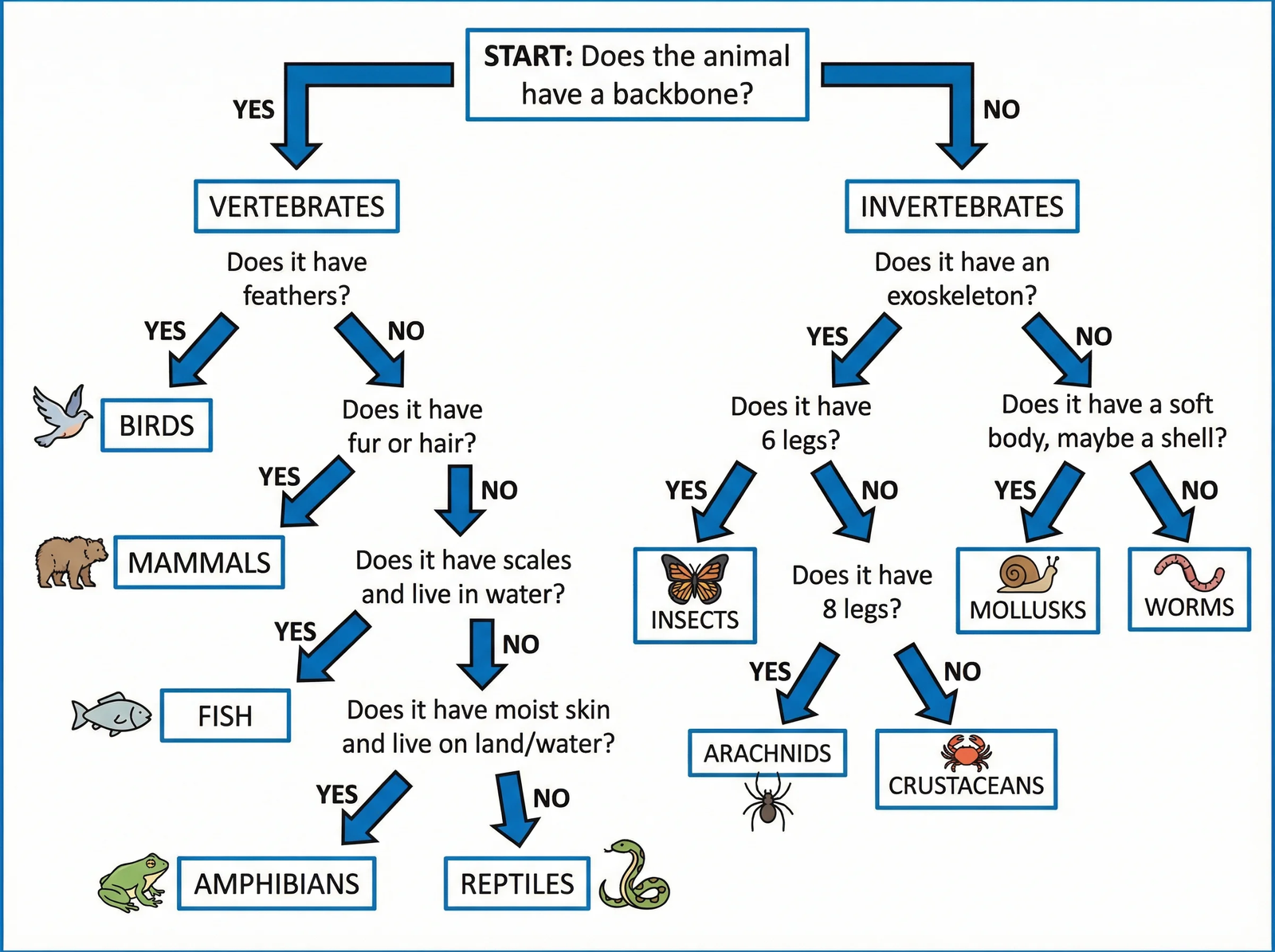
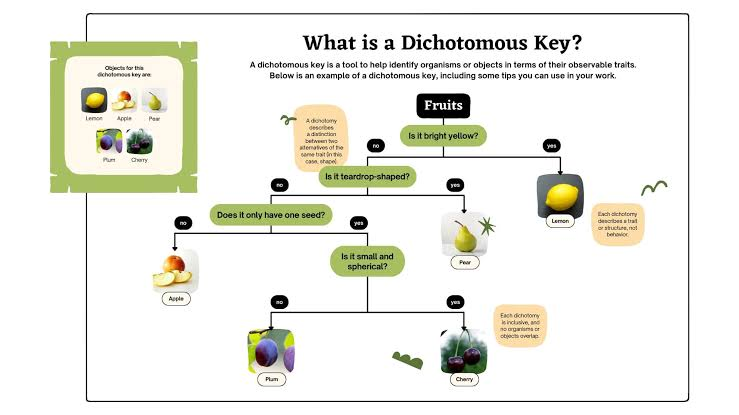
Another popular type is the flowchart dichotomous key, which displays choices through a visual branching structure. This format is easier for many learners because they can see the identification path clearly. Digital dichotomous keys are also becoming common because online tools allow users to interact with questions and receive faster identification results.
Each type of dichotomous key follows the same basic principle of using two contrasting choices. Whether the key is printed, visual, or digital, its main purpose remains the same: helping users identify unknown specimens by analyzing their unique characteristics. The format may change, but the identification process stays based on logical comparison.
Examples of Dichotomous Keys
A plant identification key is one of the most common examples of how this tool is used. Botanists and students may use characteristics such as leaf arrangement, flower color, stem structure, and plant height to identify different species. A simple key can help someone determine whether a plant belongs to a particular family or group.
Animal identification is another important area where a dichotomous key is useful. Researchers may use body features such as the number of legs, presence of wings, type of covering, or skeletal structure to identify animals and insects. For example, an insect key may separate organisms based on whether they have wings, antennae, or specific body segments.
Dichotomous keys can also be used for identifying rocks, minerals, and other non-living objects. A geology student may examine texture, hardness, color, and formation patterns to determine the type of rock. These examples show how flexible this scientific tool can be across different fields of study.
How to Create a Dichotomous Key
Creating a dichotomous key requires careful planning and a clear understanding of the items being identified. The first step is selecting a group of organisms or objects that share some similarities but also have important differences. These differences become the foundation for creating questions that separate each item from the others.
After selecting the group, the creator should observe and record important characteristics. The best characteristics are easy to recognize and provide clear differences between items. For example, using “has wings” and “does not have wings” creates a clearer choice than using a feature that is difficult to observe.
The next step is organizing these characteristics into paired statements. Each question should provide only two possible answers that guide users toward the next stage. After completing the key, it should be tested several times to make sure users can reach the correct identification without confusion.
Advantages and Limitations of Dichotomous Keys
A dichotomous key provides many benefits for learning and scientific research. It helps users develop observation skills, understand classification systems, and identify unknown specimens in a structured way. Students often use these tools during biology lessons because they make complex classification concepts easier to understand.
Scientists also depend on identification keys during field studies and environmental research. These tools allow researchers to quickly categorize organisms while studying ecosystems, wildlife populations, and plant diversity. Their simple question-based format makes them useful even when working outside a laboratory.
However, dichotomous keys also have some limitations. They require accurate observations, and mistakes in identifying features can produce incorrect results. Some organisms may have similar characteristics, making identification challenging. A key must also be updated when new species information becomes available.
Dichotomous Key vs Taxonomic Key
A dichotomous key and a taxonomic key are related tools used for classification and identification, but they are not exactly the same. A dichotomous key focuses on a series of two-choice questions that guide users toward a final identification. It is commonly used by students, teachers, and field researchers because of its simple structure.
A taxonomic key may involve broader classification methods and is often used in advanced scientific studies. While both tools help organize living things, their purpose and complexity can differ. Dichotomous keys are usually easier for beginners because they break identification into smaller, manageable decisions.
Understanding the difference between these tools helps learners choose the right method for their needs. For basic identification tasks, a dichotomous key is often the preferred option because it provides a clear path from observation to identification.
Common Mistakes When Using a Dichotomous Key
Many people struggle with identification keys because they rush through the choices or ignore important details. One common mistake is selecting an answer without carefully comparing the specimen’s features. Even a small difference in shape, size, or structure can change the final result.
Another mistake is skipping steps or assuming the answer before completing the entire process. A dichotomous key is designed to work in a specific order, and every question helps remove incorrect possibilities. Following each step carefully improves accuracy and confidence.
To use these tools successfully, users should take time to observe characteristics, read each statement carefully, and confirm the final identification. Practice and experience make it easier to recognize important features and avoid common errors.
Real-Life Uses of Dichotomous Keys
Dichotomous keys are used in many real-world situations beyond classrooms. Biologists use them to identify species during research, while environmental scientists use them to study ecosystems and monitor biodiversity. These tools are especially valuable during outdoor fieldwork where quick identification is needed.
Farmers, gardeners, and nature enthusiasts can also benefit from using identification keys. They can help recognize plants, insects, and other organisms that appear in natural environments. Educational institutions use them to teach students about classification, observation, and scientific thinking.
Because they provide a simple and reliable identification method, dichotomous keys continue to be an important part of science education and research. They connect basic observation with scientific understanding and help people explore the natural world more effectively.
Conclusion
A dichotomous key is a powerful classification tool that transforms the process of identifying unknown organisms and objects into a simple series of decisions. By comparing characteristics and following paired choices, users can discover accurate identifications without requiring complicated methods. This makes the tool valuable for students, teachers, researchers, and anyone interested in understanding the world around them.
From identifying plants and animals to studying rocks and microorganisms, these keys continue to support scientific learning and discovery. Learning how a dichotomous key works improves observation skills, encourages critical thinking, and provides a foundation for understanding biological classification. As science continues to develop, these simple yet effective tools remain an important resource for exploration and research.
FAQs
What is a dichotomous key?
A dichotomous key is a scientific identification tool that uses two-choice questions to help identify unknown organisms, plants, animals, rocks, or objects.
How does a dichotomous key work?
A dichotomous key works by guiding users through paired statements. Each choice leads to another step until the correct identification is found.
Why are dichotomous keys important in biology?
Dichotomous keys help scientists and students classify organisms, understand differences between species, and improve observation skills.
What are the different types of dichotomous keys?
The main types include written keys, flowchart keys, and digital interactive keys used for identification purposes.
Can a dichotomous key identify plants and animals?
Yes, dichotomous keys are commonly used to identify plants, animals, insects, microorganisms, and other natural specimens.
How do you make a dichotomous key?
To make one, choose items for identification, study their differences, create two-choice statements, organize the steps, and test the results.
What is the difference between a dichotomous key and a taxonomic key?
A dichotomous key uses two-choice questions for identification, while a taxonomic key may use broader classification methods in scientific studies.
You May Also Read: Balkans