


The word try is one of the most common and useful words in the English language. People use it every day to describe making an effort, attempting an action, or testing something new. Although it looks simple, this word has several meanings that change depending on the situation. Learning how this word works can help English learners improve their vocabulary, conversations, and writing skills.
The meaning of try is connected with effort, exploration, and experience. Someone may try to complete a difficult task, try a new activity, or try a different solution to a problem. Because the word appears in casual conversations, education, workplaces, and many other situations, understanding its correct usage is important for clear communication.
What Does Try Mean in English?
The basic try meaning is to make an effort to do something or attempt to achieve a specific result. When a person says they will try, they are showing a willingness to put energy into an action. The result may be successful or unsuccessful, but the important idea is that an attempt is being made.
The word can also mean testing or experiencing something to discover whether it works or whether someone likes it. For example, a person might try a new food, try a different learning method, or try a new piece of technology. In these situations, the focus is not only on effort but also on discovering an outcome through experience.
Different Uses of the Word Try
The word try has many uses because it can describe different types of actions. One common use is when someone makes an effort to complete something challenging. A student may try to understand a difficult lesson, an employee may try to solve a workplace issue, or an athlete may try to improve their performance.
Another important use is when people want to test something before making a final decision. Someone may try a new restaurant, try a new exercise routine, or try a different product. This usage shows curiosity and a willingness to explore new options before deciding what works best.
Try as a Verb and Grammar Rules
In English grammar, try is mainly used as a verb that describes an attempt or action. The most common structure is “try to” followed by another verb. This form means making an effort to complete a particular action. For example, a person may say they will try to learn a new language or try to finish a project on time.
Another important grammar pattern is “try + verb-ing.” This structure means testing a method or idea to see if it produces a good result. For example, someone might suggest trying changing a routine to improve productivity. Understanding the difference between these structures helps learners avoid confusion and use the word naturally.
Common Phrases and Expressions With Try
Many common English expressions include the word try, and these phrases are frequently used by native speakers. Learning these expressions makes conversations sound more natural and helps learners understand everyday communication. These phrases often appear in movies, books, workplace discussions, and casual conversations.
The phrase “try out” means testing something to see how it works or whether it is suitable. “Try on” is used when someone puts on clothing or accessories to check their appearance and fit. Other expressions such as “give it a try” encourage someone to make an effort, while “try your best” means putting maximum effort into an activity.
Examples of Try in Everyday Sentences
Understanding examples is one of the best ways to learn how the word works in real situations. Someone might say, “I will try to complete my homework before dinner,” which shows an intention to make an effort. Another example is, “You should try this new restaurant,” where the meaning focuses on experiencing something different.
In professional communication, people often use try when discussing ideas and possible improvements. A manager may suggest trying a new strategy, or a team member may decide to try a different approach to solve a challenge. These examples show how flexible the word can be across personal and professional situations.
Difference Between Try, Attempt, Test, and Similar Words
Although try, attempt, and test have similar meanings, they are not always used in the same way. Try is the most common and informal choice for everyday conversations. It usually sounds natural when talking about making an effort or experiencing something new.
Attempt is a more formal word that often suggests a serious effort toward achieving a difficult goal. Test focuses more on checking performance, quality, or results. For example, scientists may test an idea, while a person may try a new method. Knowing these differences helps writers and speakers choose better words.
Try Meaning in Different Contexts
The meaning of try can change depending on where and how it is used. In education, students may try to answer questions, try different study techniques, or try to improve their skills. In sports, players may try to achieve better results through practice, training, and determination.
In technology, people often try new applications, tools, or features to understand their benefits. The word can also appear in legal contexts, where a case is tried in court to determine an outcome. These different examples show why understanding context is necessary when learning English vocabulary.
Common Mistakes When Using Try
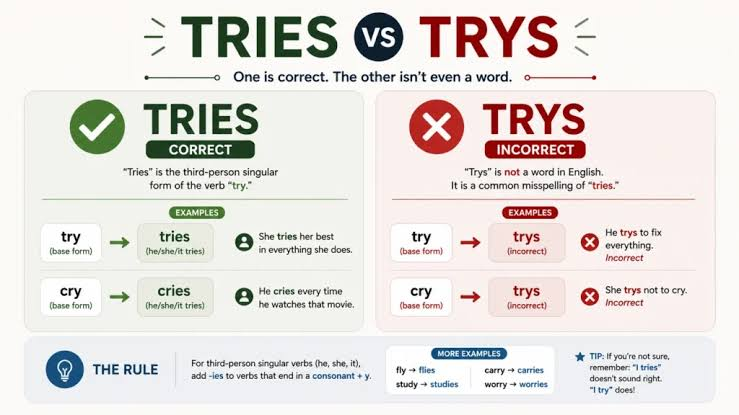
Many English learners make mistakes because they do not understand the different grammar patterns connected with try. A common mistake is confusing “try to do something” with “try doing something.” The first means making an effort, while the second means experimenting with an option to see if it helps.
Another mistake is using incorrect sentence structures or forgetting how phrasal expressions work. Practising examples and reading natural English sentences can improve accuracy. Learning the correct forms allows speakers to communicate ideas more clearly and confidently in different situations.
Why Learning the Meaning of Try Improves English Skills
Learning simple but powerful words can make a major difference in English fluency. The word try appears frequently in conversations, articles, instructions, and everyday communication. Understanding its meanings allows learners to express effort, willingness, and exploration more effectively.
A strong vocabulary is built by understanding how words work in different situations. When learners know how to use try correctly, they can create more natural sentences and understand native speakers more easily. This small word provides many opportunities to improve communication skills.
Conclusion
The word try has a simple appearance but a wide range of meanings and uses. It can describe making an effort, testing something new, exploring possibilities, or attempting to reach a goal. Understanding its grammar patterns, common phrases, and different contexts helps learners use English more effectively.
Whether someone is trying to achieve success, trying a new experience, or trying a different solution, this word plays an important role in everyday communication. Mastering its usage can improve confidence and make both spoken and written English more natural.
Frequently Asked Questions
What does try mean in English?
Try means to make an effort, attempt something, or test something to discover the result.
What is the difference between try to and try doing?
Try to means making an effort to complete an action, while try doing means testing a possible method or solution.
How can I use try in a sentence?
You can use try to describe an attempt, such as saying, “I will try to finish my work today.”
What does try out mean?
Try out means to test something or experience it before deciding whether it is suitable.
What are some common phrases with try?
Common phrases include try out, try on, give it a try, try again, and try your best.
You May Also Read: Angler Fish Size