

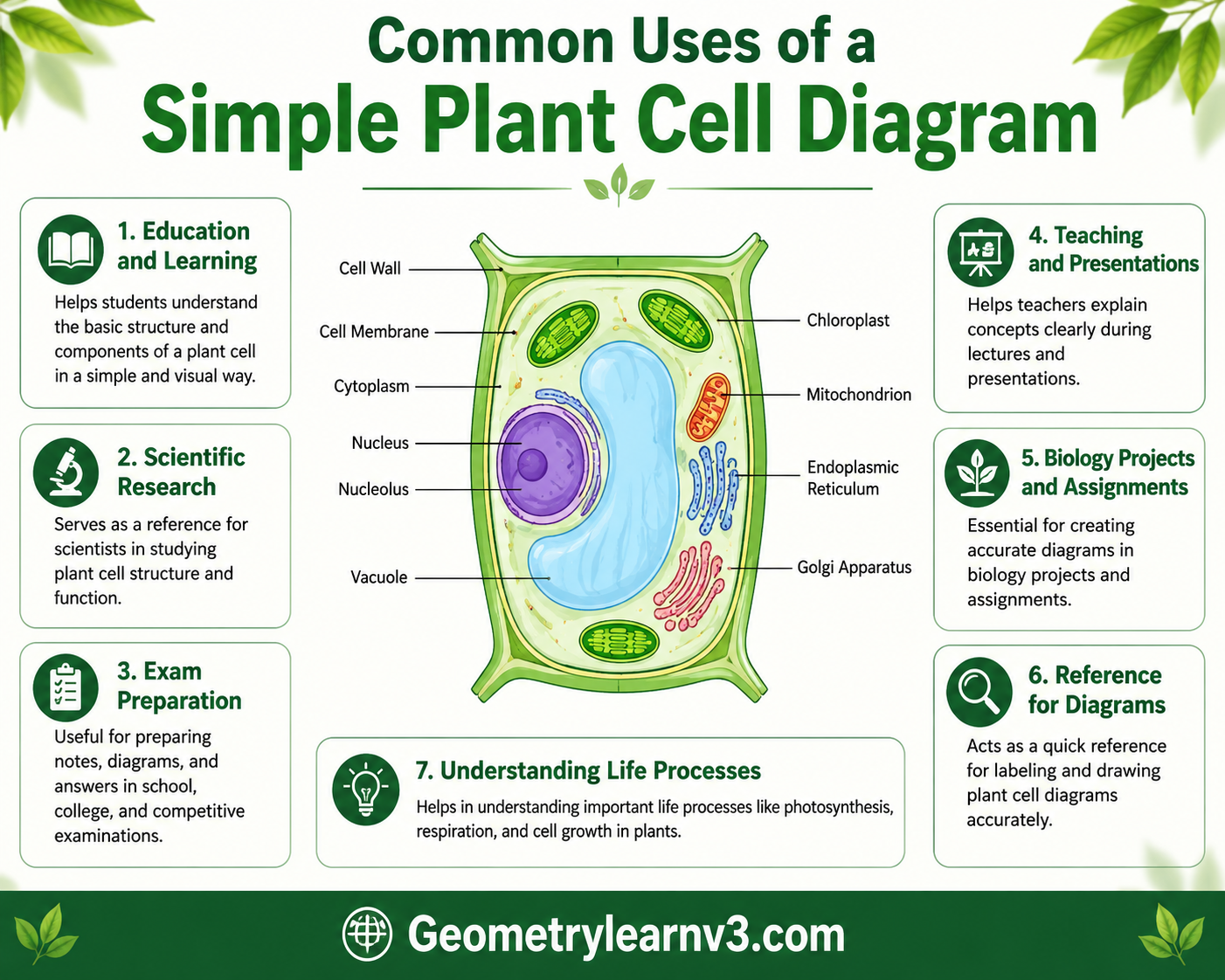
A simple plant cell diagram is one of the most valuable learning tools in biology. It provides a visual representation of the internal structures that make up a plant cell, helping students understand how each component contributes to the life of a plant. From school classrooms to science projects, diagrams make complex scientific concepts much easier to grasp and remember.
Understanding a simple plant cell diagram is important because plant cells are the building blocks of all plant life. Every leaf, stem, flower, and root is made up of countless plant cells working together. By studying a labelled diagram, learners can identify key structures and develop a stronger understanding of plant anatomy, growth, and biological functions.
What Is a Plant Cell?
A plant cell is the basic structural and functional unit of a plant. It is classified as a eukaryotic cell, meaning it contains a true nucleus and several specialised organelles enclosed within membranes. These organelles perform essential tasks that allow plants to grow, reproduce, and respond to their environment effectively.
Unlike animal cells, plant cells possess several unique features that enable them to survive independently. Structures such as the cell wall, chloroplasts, and a large central vacuole give plants their strength and ability to produce food through photosynthesis. A simple plant cell diagram helps learners clearly recognise these unique features and understand their significance.
Simple Plant Cell Diagram and Its Main Components
A simple plant cell diagram typically includes all major structures found inside a plant cell. Each part is clearly labelled, allowing students to identify organelles and understand their specific roles. This visual approach simplifies learning and supports better retention of scientific information.
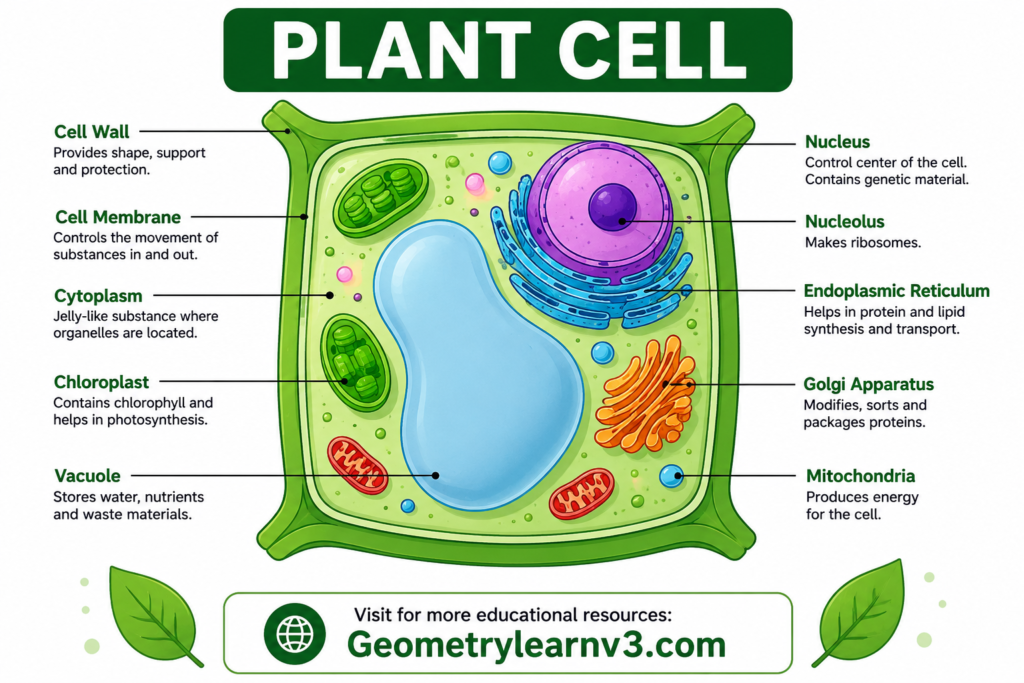
The main components shown in a simple plant cell diagram include the cell wall, cell membrane, nucleus, cytoplasm, chloroplasts, vacuole, and mitochondria. Together, these structures form a highly organised system that enables the cell to perform all necessary functions. Learning about these components provides a strong foundation for understanding biology at a deeper level.
Plant Cell Parts and Their Functions
Every structure within a plant cell serves a specific purpose. The cell wall is the rigid outer covering that protects the cell and provides support. Just beneath it lies the cell membrane, which regulates the movement of substances into and out of the cell. These layers work together to maintain the cell’s stability and health.
Inside the cell, the nucleus acts as the control centre, directing activities and storing genetic information. Chloroplasts contain chlorophyll, the pigment responsible for capturing sunlight during photosynthesis. The vacuole stores water and nutrients, while mitochondria generate energy for cellular activities. A simple plant cell diagram helps learners understand how these parts cooperate to sustain life.
How to Draw a Simple Plant Cell Diagram
Drawing a simple plant cell diagram can be a rewarding educational exercise. Begin by sketching a rectangular shape to represent the cell wall. Inside this shape, draw a slightly smaller outline for the cell membrane. This creates the basic framework needed for the diagram.
Once the outer layers are complete, add the nucleus, chloroplasts, vacuole, mitochondria, and cytoplasm. Carefully position each organelle and label them clearly. Using different colours can make the diagram more attractive and easier to understand. Regular practice helps students improve their scientific drawing skills and reinforces their understanding of plant cell structure.
Plant Cell Organelles Explained
Organelles are specialised structures that perform specific functions within the plant cell. Each organelle contributes to the overall survival and efficiency of the cell. Without these tiny components, plants would be unable to carry out essential processes such as growth, energy production, and reproduction.
Chloroplasts are among the most important organelles because they enable photosynthesis. Mitochondria release energy from food molecules, while the vacuole stores water and helps maintain pressure within the cell. The nucleus coordinates activities throughout the cell. A simple plant cell diagram clearly displays these organelles, making it easier to understand their individual roles and relationships.
Plant Cell vs Animal Cell
Plant cells and animal cells share many similarities because both belong to the eukaryotic category. They contain a nucleus, cytoplasm, mitochondria, and cell membrane. These structures perform essential functions that keep the cells alive and functioning properly.
Despite these similarities, several key differences exist. Plant cells possess a rigid cell wall, chloroplasts, and a large central vacuole, whereas animal cells do not. These unique structures allow plants to produce their own food and maintain a stable shape. Comparing the two cell types provides valuable insight into the diversity of life and cellular adaptation.
Common Uses of a Simple Plant Cell Diagram
A simple plant cell diagram is widely used in educational settings. Teachers often use diagrams to introduce students to the fundamentals of cell biology. Visual learning tools make scientific concepts more accessible and help students develop a stronger understanding of plant structure and function.
Diagrams are also valuable for homework assignments, classroom presentations, revision materials, and science fair projects. Their ability to present information clearly makes them an effective resource for learners of all ages. Many textbooks and online educational platforms rely heavily on plant cell diagrams to support biology education.
Common Mistakes Students Make When Learning Plant Cell Structure
Many students struggle to distinguish between the different organelles found within a plant cell. Chloroplasts and mitochondria are often confused because both play roles related to energy. Similarly, some learners forget the unique function of the vacuole or incorrectly identify the cell wall and cell membrane.
Another common mistake involves inaccurate labelling or poor diagram organisation. Missing labels or incorrectly placed structures can create confusion and reduce the educational value of the diagram. Studying a simple plant cell diagram carefully and practising regularly can help students avoid these errors and build confidence in their biology knowledge.
Conclusion
A simple plant cell diagram is an essential educational resource that helps learners understand the structure and function of plant cells. By clearly illustrating important organelles and their relationships, diagrams transform complex biological concepts into information that is easy to understand and remember.
Whether you are preparing for examinations, completing assignments, or simply exploring biology, studying a simple plant cell diagram can strengthen your understanding of plant life. The knowledge gained from learning about plant cell structure provides a solid foundation for future studies in science and encourages a deeper appreciation of the natural world.
FAQs
What is a simple plant cell diagram?
A simple plant cell diagram is a labelled illustration that shows the major structures and organelles found inside a plant cell, making biological concepts easier to understand.
What are the main parts of a plant cell?
The main parts include the cell wall, cell membrane, nucleus, cytoplasm, chloroplasts, vacuole, and mitochondria.
Why do plant cells have chloroplasts?
Chloroplasts contain chlorophyll and allow plants to produce food through the process of photosynthesis.
How is a plant cell different from an animal cell?
Plant cells have a cell wall, chloroplasts, and a large central vacuole, while animal cells generally lack these structures.
Why is a simple plant cell diagram important for students?
It helps students identify cell structures, understand their functions, and improve their knowledge of biology through visual learning.
What is the function of the vacuole in a plant cell?
The vacuole stores water, nutrients, and waste materials while helping the cell maintain its shape and internal pressure.
You May Also Read: Land turtle vs tortoise