

The West Virginia flag is more than a state symbol displayed on government buildings and public events. Behind its white field, blue borders, and detailed coat of arms lies a story of independence, resilience, and Appalachian identity. As interest in state history, cultural symbols, and regional heritage continues to grow, the flag has gained renewed attention among residents, historians, educators, and visitors exploring what makes West Virginia unique.
Created after the state entered the Union during the Civil War era, the flag reflects the values that shaped West Virginia’s identity. From its mining communities and mountain traditions to its role in American history, every element on the design carries meaning. Understanding the origins and symbolism of this emblem reveals how a piece of fabric became a representation of an entire state’s journey.
The Origins of the West Virginia Flag and Its Historical Background
The story of the West Virginia flag begins with the state’s formation during one of the most difficult periods in American history. West Virginia became the 35th state of the United States on June 20, 1863, after separating from Virginia during the Civil War. The decision created a new political identity built around loyalty to the Union and a distinct Appalachian heritage.
For many years after statehood, West Virginia did not have an official flag. Like several states during the 19th century, it relied on seals, military banners, and unofficial symbols to represent its identity. As state pride increased, leaders recognized the need for an official emblem that could represent West Virginia at national events and public ceremonies.
The first official state flag was adopted in 1905, although the design later underwent modifications. The modern version was officially established in 1929, creating the recognizable appearance used today. The design connects the state’s history, natural resources, and values through carefully chosen symbols.
Understanding the Design and Symbols on the State Flag
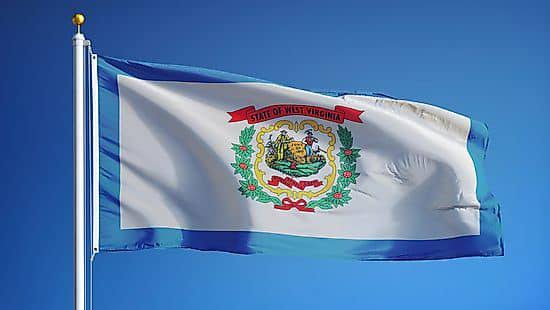
The West Virginia flag features a pure white background surrounded by a dark blue border. In the center is the state coat of arms, which contains several important historical images. The design represents peace, agriculture, industry, and the struggles involved in creating the state.
At the center of the coat of arms is a large rock with the inscription “June 20, 1863,” marking the date West Virginia achieved statehood. In front of the rock are two crossed rifles and a traditional hunting horn, symbols connected with the state’s frontier history and the defense of liberty.
The coat of arms also includes a farmer and a miner standing on either side of the stone. These figures represent the importance of agriculture and natural resource industries in building the state’s economy. The imagery reflects the relationship between West Virginia’s people and the land that shaped their communities.
The Meaning Behind the West Virginia Flag Colors
The colors used in the West Virginia flag carry symbolic importance. White represents purity and peace, while blue represents loyalty, justice, and the state’s connection to the United States. These meanings were chosen to reflect the values West Virginians associated with their new state identity.
The blue border surrounding the white background also helps distinguish the flag from many other state flags. While numerous state flags use seals placed on blue backgrounds, West Virginia’s design creates contrast by placing its detailed emblem on a lighter field.
Over time, these colors have become strongly connected with West Virginia culture. They appear at sporting events, festivals, government ceremonies, and community celebrations where residents use the flag as a symbol of belonging and pride.
How the West Virginia Flag Represents Appalachian Identity
The West Virginia flag serves as a visual representation of Appalachian history and culture. The state’s identity has long been connected with mountain communities, family traditions, natural resources, and a strong sense of independence.
The miner depicted on the coat of arms reflects the importance of coal mining, an industry that played a major role in West Virginia’s economic development. For generations, mining communities helped shape the state’s workforce, politics, and cultural traditions.
At the same time, the farmer represents another essential part of West Virginia life. Rural agriculture, family farms, and connections to the land remain important parts of the state’s heritage. Together, the miner and farmer represent two foundations of West Virginia’s historical economy.
The Role of the Flag in Modern West Virginia Culture
Today, the West Virginia flag appears throughout public life, from state government offices to schools and community gatherings. It represents not only political boundaries but also shared memories and traditions among residents.
The flag has become increasingly visible through tourism campaigns and cultural events highlighting the state’s mountains, outdoor recreation, and historical attractions. As more travelers explore destinations such as the New River Gorge National Park and Preserve, interest in West Virginia symbols has grown alongside interest in the state itself.
Modern residents often view the flag as a connection between past and present. While the state continues to change economically and socially, the flag remains a reminder of the historical events and communities that shaped West Virginia.
Recent Interest and Digital Trends Surrounding State Flags
In recent years, state symbols have gained new attention online as people research genealogy, regional history, and cultural identity. Searches related to state flags, including their meanings and origins, have increased as educational content becomes more accessible through digital platforms.
Social media has also influenced how people interact with state symbols. Images of flags appear frequently during state celebrations, sports events, historical anniversaries, and tourism campaigns. These platforms have helped younger generations discover the stories behind symbols that were once mainly found in government settings.
Historians and educators increasingly use digital resources to explain state heritage in engaging ways. This trend has created opportunities for people to learn about symbols like the West Virginia flag through videos, interactive maps, and online history projects.
How the Flag Reflects West Virginia’s Economic and Social History
The imagery on the flag provides a snapshot of West Virginia’s development. The state’s economy has historically depended on industries such as coal, timber, manufacturing, and agriculture. Each industry influenced communities and helped define the state’s reputation across the United States.
The mining symbol on the flag has particular significance because coal shaped West Virginia’s growth during the Industrial Revolution. The state became one of America’s leading coal producers, supplying energy for factories, transportation, and national development.
However, West Virginia’s modern economy is becoming more diverse. Growing sectors include tourism, technology, healthcare, education, and outdoor recreation. Despite these changes, the flag continues to represent the historical foundation that influenced the state’s progress.
Comparing the West Virginia Flag With Other State Flags
The West Virginia flag has a distinctive design compared with many other state flags because it uses a white background instead of the more common blue field. This choice allows the coat of arms to stand out clearly and gives the flag a unique appearance.
Many American state flags incorporate seals or official emblems, but West Virginia’s design places special emphasis on the moment of statehood and the people who built its communities. The combination of historical date, agricultural imagery, and industrial symbols creates a narrative rather than simply displaying government authority.
Flag experts often emphasize that effective symbols tell stories quickly. In this way, West Virginia’s flag succeeds because each element communicates a specific part of the state’s history and identity.
The Future of the West Virginia Flag as a Cultural Symbol
As interest in local history and cultural preservation continues, the West Virginia flag is likely to remain an important symbol for future generations. Digital education, tourism growth, and renewed interest in regional identity will continue introducing the emblem to new audiences.
Future discussions about state symbols may focus on how flags represent changing communities while preserving historical meaning. Across the United States, many states are examining how their symbols connect past achievements with modern values.
For West Virginia, the flag’s future depends on its ability to remain meaningful to both longtime residents and newcomers. Its strength comes from representing shared history while allowing each generation to create its own connection with the symbol.
Key Takeaways
The West Virginia flag became an official state symbol in the early 20th century and represents the state’s unique history.
Its design includes the state coat of arms, which highlights statehood, agriculture, mining, and frontier traditions.
The colors white and blue represent values such as peace, purity, loyalty, and justice.
The miner and farmer figures symbolize the industries and communities that helped build West Virginia.
Modern interest in state history and digital education has increased attention toward the flag and its meaning.
The flag continues to serve as a cultural connection between West Virginia’s past, present, and future.
Conclusion
The West Virginia flag is a powerful reminder that symbols often carry stories far beyond their appearance. Every detail, from the statehood date on the stone to the figures representing workers and farmers, reflects the experiences that shaped West Virginia’s identity.
As the state continues to evolve, the flag remains a connection between generations. It represents historical struggles, economic contributions, Appalachian traditions, and the lasting pride of its people. Exploring the meaning behind the West Virginia flag offers a deeper understanding of how communities preserve their heritage while moving toward the future.
Whether you are researching American history, planning a visit, or learning more about state symbols, the story behind West Virginia’s flag provides valuable insight into the people and events that shaped one of America’s most distinctive states.
Frequently Asked Questions
When was the West Virginia flag officially adopted?
The West Virginia flag was officially adopted in 1905, with the current design established through later changes in 1929.
What do the symbols on the West Virginia flag represent?
The symbols represent statehood, agriculture, mining, frontier history, and the values connected with West Virginia’s development.
What do the colors on the West Virginia flag mean?
White represents purity and peace, while blue represents loyalty, justice, and connection to the United States.
Why is June 20, 1863, shown on the flag?
June 20, 1863, is the date West Virginia became the 35th state of the United States.
Who are the two figures on the West Virginia flag?
The figures are a farmer and a miner, representing two important parts of the state’s historical economy.
Is the West Virginia flag different from other state flags?
Yes. Its white background and detailed coat of arms make it visually distinct from many other state flags.
Why is the West Virginia flag important today?
The flag remains a symbol of state pride, cultural heritage, and the historical experiences that shaped West Virginia.
You May Also Read: Rose Quartz Meaning