

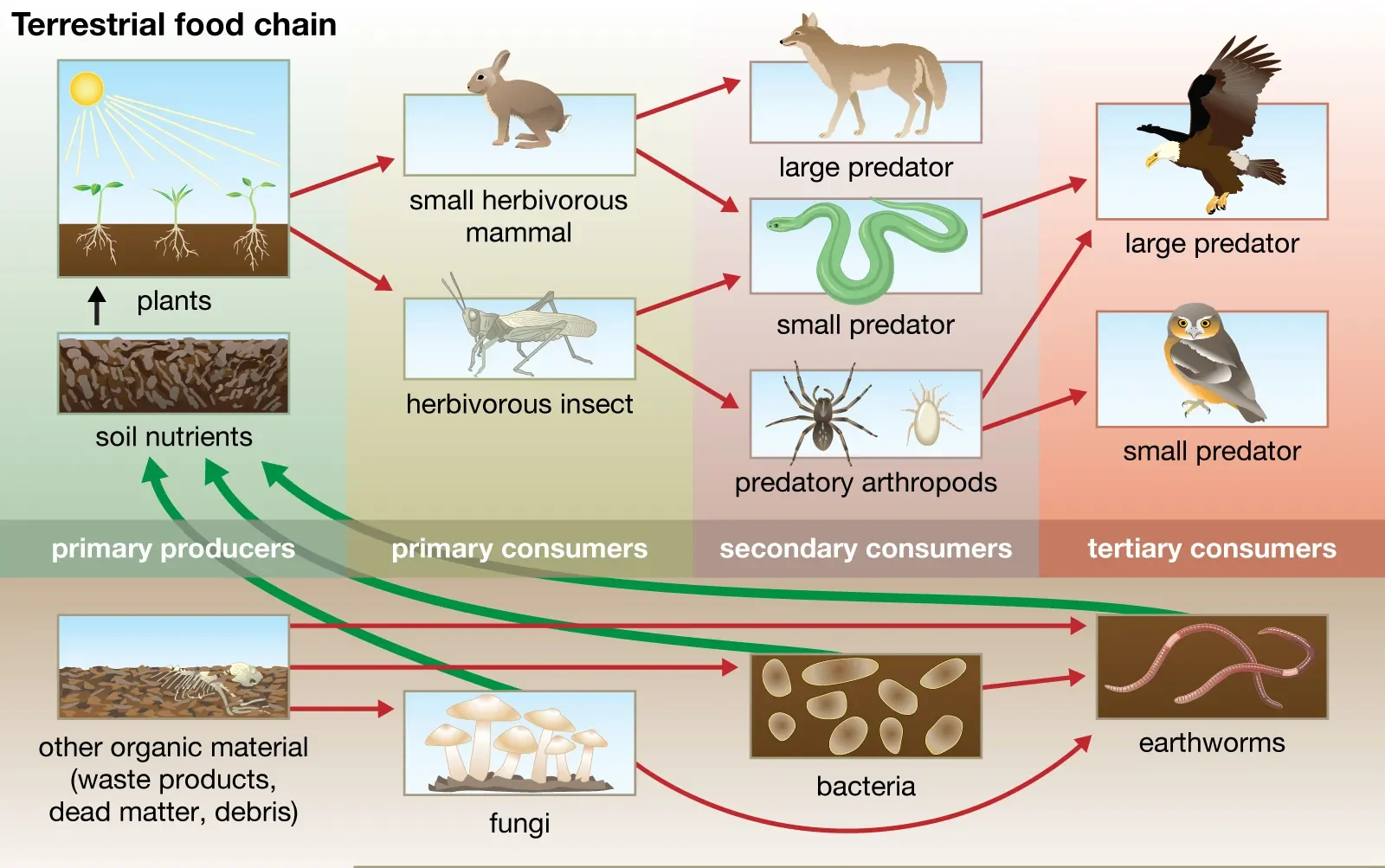
Every living organism on Earth is connected through a complex system of energy movement and feeding relationships. Plants, animals, and microorganisms depend on each other to survive, and these connections create the foundation of every ecosystem. Trophic levels describe the position of an organism in a food chain or food web based on how it obtains energy. They help scientists and students understand how energy moves through nature and how different species interact with each other.
Understanding trophic levels is essential for learning how ecosystems remain balanced. Each organism has a specific role, from plants that produce energy to predators that control populations. When one part of this system changes, it can affect many other organisms. By studying these levels, researchers can better understand biodiversity, environmental changes, and the importance of protecting natural habitats around the world.
What Are Trophic Levels? Definition and Basic Concept
Trophic levels are the different stages in a food chain or food web that show how organisms receive energy. The term refers to the feeding position of an organism within an ecosystem. The first level usually contains producers, while the higher levels include different types of consumers that depend on other organisms for food and energy. These levels create a clear structure that explains the movement of energy through nature.
The concept of trophic levels helps explain why every organism has an important place in an ecosystem. Energy begins with producers and moves through herbivores, carnivores, and top predators. However, energy becomes lower as it moves upward because organisms use energy for growth, movement, and daily activities. This natural process limits the number of levels that can exist in most food chains.
Primary Producers and the First Trophic Level
The first trophic level is made up of primary producers, which are organisms capable of creating their own food. Plants, algae, and phytoplankton are common examples of producers because they use sunlight, water, and carbon dioxide to produce energy through photosynthesis. These organisms form the foundation of ecosystems because all other organisms depend directly or indirectly on them for survival.
Primary producers are extremely important in maintaining life on Earth because they introduce energy into ecosystems. In forests, trees and plants provide food for herbivores, while in oceans, microscopic phytoplankton support large marine food chains. Without producers, higher trophic levels would not have enough energy sources, and ecosystems would eventually collapse due to a lack of available food.
Primary Consumers and Their Role in Food Chains
Primary consumers occupy the second trophic level because they obtain energy by eating producers. These organisms are mostly herbivores that feed on plants, algae, or other plant-based materials. Examples of primary consumers include rabbits, deer, insects, and many types of small marine animals. They play an important role by transferring energy from producers to higher-level consumers.
The survival of many predators depends on primary consumers because they provide the connection between plant life and animal populations. If herbivore numbers become too low, predators may struggle to find enough food. On the other hand, if herbivore populations grow too large, they may consume excessive plant resources. This balance shows how each trophic level influences the stability of an ecosystem.
Secondary Consumers and Tertiary Consumers Explained
Secondary consumers are organisms that feed on primary consumers. They usually include carnivores and omnivores that hunt or consume herbivores. Examples include frogs that eat insects, small fish that eat aquatic organisms, and birds that feed on smaller animals. These consumers help control herbivore populations and maintain balance within ecosystems.
Tertiary consumers are found at an even higher position because they eat secondary consumers. These organisms often include larger predators such as large fish, snakes, and powerful birds of prey. They regulate populations of lower-level consumers and prevent certain species from becoming too dominant. Together, secondary and tertiary consumers demonstrate how energy moves through multiple stages in a food chain.
Apex Predators and Their Importance in Ecosystems
Apex predators represent some of the highest positions in many food chains. These animals usually have few natural predators and influence the populations of other species within their environment. Examples of apex predators include lions, sharks, wolves, and killer whales. Their presence helps maintain healthy ecosystems by controlling the numbers of animals below them.
The removal of apex predators can create major changes throughout an ecosystem. When top predators disappear, prey populations may increase rapidly, causing overconsumption of plants and other resources. This chain reaction, known as a trophic cascade, shows how important every level is. Protecting apex predators helps preserve natural balance and supports biodiversity across different environments.
Energy Flow Through Trophic Levels
Energy flow is one of the most important ideas connected to trophic levels. Energy enters most ecosystems through sunlight, which producers convert into usable energy. When herbivores eat plants and predators eat herbivores, energy moves from one level to another. This continuous transfer allows ecosystems to function and supports the survival of different organisms.
However, energy decreases as it moves higher through trophic levels. Scientists often explain this process through the 10% rule, which suggests that only about 10% of energy from one level is transferred to the next. The remaining energy is used for biological activities or released as heat. Because of this energy loss, food chains usually contain only a limited number of levels.
Trophic Levels in Food Chains and Food Webs
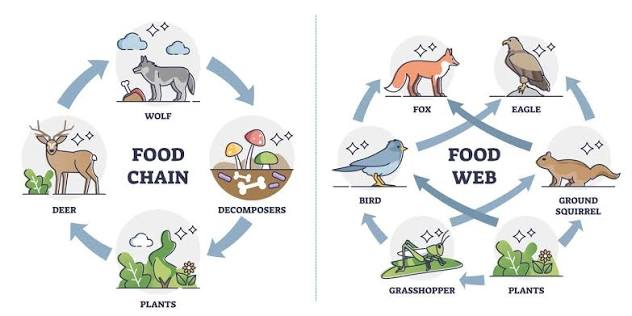
Food chains and food webs show how organisms are connected through feeding relationships. A food chain represents a simple pathway of energy movement, such as grass being eaten by a rabbit and the rabbit being eaten by a fox. Each organism in this chain represents a different trophic level based on its role in energy transfer.
Food webs are more realistic because they include many connected food chains within an ecosystem. Most animals do not depend on only one food source, so multiple relationships exist between species. These complex networks help ecosystems remain stable because organisms can have different sources of food and energy. Understanding these connections provides valuable information about how nature works.
Ecological Pyramids and Trophic Level Structure
Ecological pyramids are visual models that show the relationship between organisms at different trophic levels. The three main types include pyramids of energy, biomass, and numbers. These models help scientists understand how energy, living material, and organism populations change from producers to higher-level consumers.
The pyramid of energy always decreases toward the top because less energy is available at higher levels. Producers form the widest part of the pyramid because they contain the most available energy. Higher consumers occupy smaller sections because fewer organisms can be supported with limited energy resources.
Decomposers and Their Connection With Trophic Systems
Decomposers such as fungi and bacteria play an important role in maintaining ecosystem health. They break down dead plants, animals, and organic materials, returning nutrients back into the environment. These recycled nutrients help producers grow and continue the cycle of energy movement throughout ecosystems.
Although decomposers are not always placed into a single trophic level, they interact with every part of the food chain. Without decomposers, dead materials would build up, and important nutrients would not return to the soil and water. Their work supports the survival of producers, consumers, and entire ecosystems.
Examples of Trophic Levels in Different Ecosystems
Different ecosystems contain unique examples of trophic levels based on available resources and environmental conditions. In a forest ecosystem, plants act as producers, insects and deer act as primary consumers, and predators such as wolves represent higher-level consumers. Each organism contributes to the movement of energy throughout the forest environment.
Ocean ecosystems also demonstrate complex trophic relationships. Phytoplankton provide energy for small marine animals, which are eaten by fish and larger predators. Grasslands follow similar patterns, where grasses support grazing animals, and predators control herbivore populations. These examples show that trophic levels exist in almost every environment on Earth.
Why Trophic Levels Are Important for Ecosystem Balance
Trophic levels help scientists understand how ecosystems maintain balance and how organisms depend on each other. Every level contributes to the movement of energy and nutrients, creating a connected system where changes in one group can affect many others. This understanding is important for conservation and environmental protection.
Human activities such as pollution, habitat destruction, and climate change can disturb natural trophic relationships. Protecting ecosystems requires awareness of how species interact and why every organism matters. By preserving different trophic levels, humans can support biodiversity and help maintain healthy environments for future generations.
Conclusion
Trophic levels provide a clear explanation of how energy moves through ecosystems and how organisms are connected through feeding relationships. Producers, consumers, predators, and decomposers all work together to maintain natural balance. Each level has a valuable role in supporting life and keeping ecosystems functioning properly.
Learning about trophic levels helps us understand food chains, energy transfer, and environmental changes. As ecosystems face increasing challenges from human activities, protecting these natural relationships becomes more important. A healthy ecosystem depends on the survival and balance of every trophic level.
FAQs
What are trophic levels in biology?
Trophic levels are positions in a food chain that show how organisms obtain energy through feeding relationships.
How many trophic levels are usually found in a food chain?
Most food chains contain four to five main trophic levels, including producers, consumers, and top predators.
What is the first trophic level in an ecosystem?
The first trophic level contains producers such as plants, algae, and phytoplankton that create their own energy.
Why does energy decrease at higher trophic levels?
Energy decreases because organisms use most energy for survival activities, and much of it is lost as heat.
What are examples of primary consumers?
Examples of primary consumers include rabbits, deer, insects, and other herbivores that eat producers.
What is the difference between a food chain and trophic levels?
A food chain shows a pathway of energy transfer, while trophic levels describe the feeding position of organisms.
Why are decomposers important in trophic systems?
Decomposers recycle nutrients from dead organisms, helping maintain ecosystem health and supporting plant growth.
You May Also Read: Words That Start With U