


The Mad Minute is one of the most iconic rifle training drills in British military history, widely associated with the period leading up to and including the First World War. It was designed to test a soldier’s ability to fire accurately and rapidly within a strict time limit of sixty seconds using the Lee-Enfield bolt-action rifle. This exercise was not just about speed but about controlled precision under pressure.
The importance of The Mad Minute lies in how it shaped early modern infantry training and battlefield readiness. British soldiers were expected to maintain discipline while delivering rapid and accurate fire against advancing enemy forces. Over time, The Mad Minute became a symbol of elite marksmanship and is still referenced in discussions about WW1 military tactics and rifle efficiency.
What Does The Mad Minute Mean
The Mad Minute refers to a timed shooting drill where a trained soldier attempted to fire as many accurate rounds as possible into a target within one minute. The exercise was usually conducted at a distance of around 300 yards, testing both accuracy and speed simultaneously. The name itself reflects the intense pressure and rapid pace of the activity.
Despite its dramatic name, The Mad Minute was not about chaotic shooting. Instead, it represented highly controlled marksmanship where soldiers had to maintain focus, breathing control, and consistent aim while cycling the bolt-action rifle rapidly. The Mad Minute became a benchmark for measuring shooting proficiency in British military training programs.
Origins of The Mad Minute in British Army Training
The origins of The Mad Minute can be traced back to pre-World War I British military doctrine, where rapid rifle fire was considered essential for infantry survival. As warfare evolved and mass infantry attacks became more common, British commanders recognized the need for soldiers who could deliver fast and accurate firepower.
The Mad Minute was developed as part of musketry training reforms that emphasized efficiency and battlefield readiness. Soldiers were trained to improve their firing speed without sacrificing precision. This drill became an essential part of preparing British troops for the challenges of modern warfare, especially as tensions in Europe increased before 1914.
The Lee-Enfield Rifle and Its Importance in The Mad Minute
The Lee-Enfield rifle played a crucial role in making The Mad Minute effective and historically significant. Known for its smooth bolt-action mechanism and large magazine capacity, the rifle allowed trained soldiers to fire rapidly without frequent interruptions for reloading. This made it one of the fastest bolt-action rifles of its time.
During The Mad Minute, the Lee-Enfield’s design gave soldiers a clear advantage in speed and control. The bolt could be cycled quickly while maintaining sight alignment, allowing for continuous and accurate fire. This combination of mechanical efficiency and training discipline made the rifle an ideal weapon for rapid-fire drills.
How The Mad Minute Was Performed in Training
The Mad Minute drill followed a strict and structured training procedure designed to simulate battlefield pressure. Soldiers would begin with a loaded rifle and extra rounds prepared for quick access. Once the timer started, they were required to engage a fixed target, typically placed at 300 yards, and fire as many accurate shots as possible within one minute.
The exercise demanded exceptional coordination between hand, eye, and mind. Soldiers had to aim, fire, cycle the bolt, and reacquire targets repeatedly without losing accuracy. Highly trained riflemen were sometimes able to achieve 12 to 15 accurate hits in a single minute, demonstrating extraordinary skill and discipline under pressure.
Performance Records and Historical Evidence of The Mad Minute
Historical accounts of The Mad Minute highlight impressive levels of marksmanship achieved by elite British soldiers. Some documented performances suggest that highly skilled riflemen could maintain extremely fast firing rates while still hitting their targets with remarkable consistency. These achievements became part of military training legend.
However, historians also note that some performance claims may have been exaggerated over time. Even so, there is strong evidence that The Mad Minute set a very high standard for infantry shooting skills. It became a respected measure of training success and demonstrated the effectiveness of British musketry instruction during that era.
The Mad Minute in World War I Combat
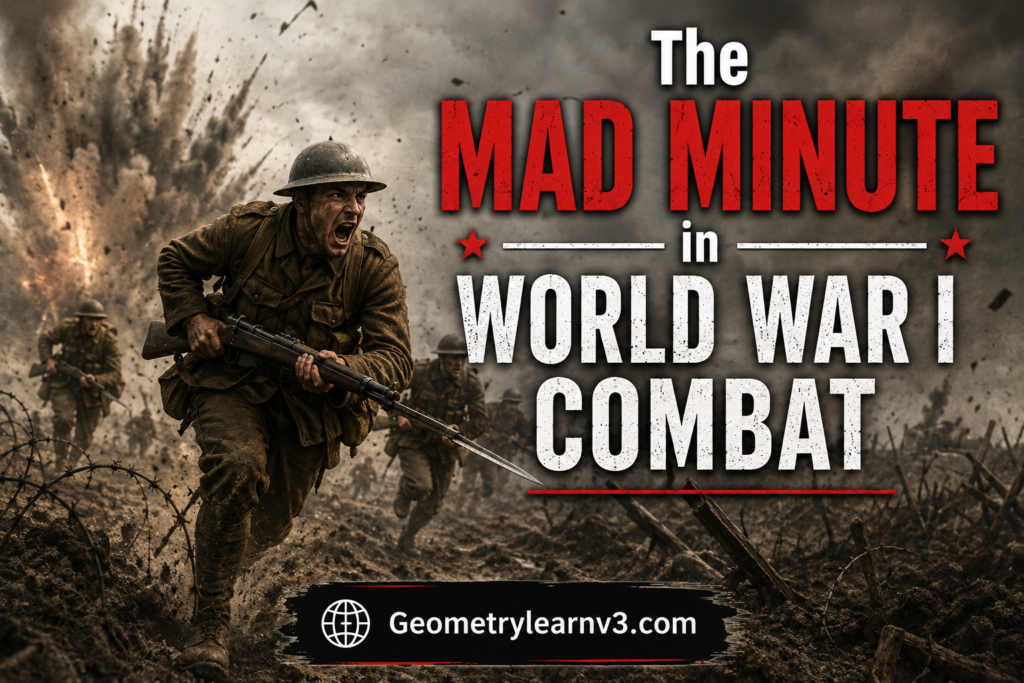
During the early stages of World War I, The Mad Minute had a noticeable impact on battlefield engagements. British riflemen used rapid and accurate fire to slow down advancing enemy troops, especially during open-field battles. This level of coordinated shooting helped create defensive advantages in critical moments.
As the war progressed and trench warfare became dominant, the role of The Mad Minute in direct combat decreased. However, its influence remained important in training and doctrine. The emphasis on speed, accuracy, and discipline continued to shape infantry tactics throughout the war and beyond.
Myths and Misconceptions About The Mad Minute
The Mad Minute is often surrounded by myths that exaggerate its nature. One common misconception is that soldiers fired randomly without aiming. In reality, the drill was based on controlled and precise shooting, where accuracy was just as important as speed. Every shot was expected to be deliberate and effective.
Another myth suggests that all soldiers could achieve record-breaking results. In truth, only highly trained marksmen reached the highest performance levels. The Mad Minute required extensive practice, discipline, and familiarity with the rifle. It was a skill-based exercise that highlighted elite training rather than average soldier performance.
Legacy of The Mad Minute in Military History
The Mad Minute left a lasting legacy in military training and marksmanship development. It demonstrated that speed and accuracy could be combined effectively through proper training and weapon design. This concept influenced later infantry training methods in various armies around the world.
Today, The Mad Minute is remembered as a symbol of British military efficiency and discipline. It continues to be studied by historians, military enthusiasts, and shooting sports communities. Its legacy lives on as an example of how structured training can dramatically enhance battlefield performance.
Conclusion
The Mad Minute remains one of the most remarkable rifle training drills in military history, representing the peak of early 20th-century marksmanship training. It showcased the importance of discipline, precision, and rapid response in combat situations where every second mattered.
Even in modern times, The Mad Minute continues to attract interest due to its historical significance and impressive performance standards. It stands as a powerful reminder of how training innovation and weapon technology combined to shape the outcomes of early modern warfare.
Frequently Asked Questions
What is The Mad Minute in simple terms?
The Mad Minute is a British Army shooting drill where soldiers fired as many accurate shots as possible in one minute.
Why was The Mad Minute important?
It trained soldiers to shoot quickly and accurately, improving battlefield effectiveness during World War I.
Which rifle was used in The Mad Minute?
The Lee-Enfield bolt-action rifle was primarily used for this training exercise.
How many shots could be fired in The Mad Minute?
Highly trained soldiers could achieve around 12 to 15 accurate shots in one minute.
Is The Mad Minute still used today?
While not a formal military standard today, it is still recreated in shooting sports and historical demonstrations.
You May Also Read: Leon Hayes