

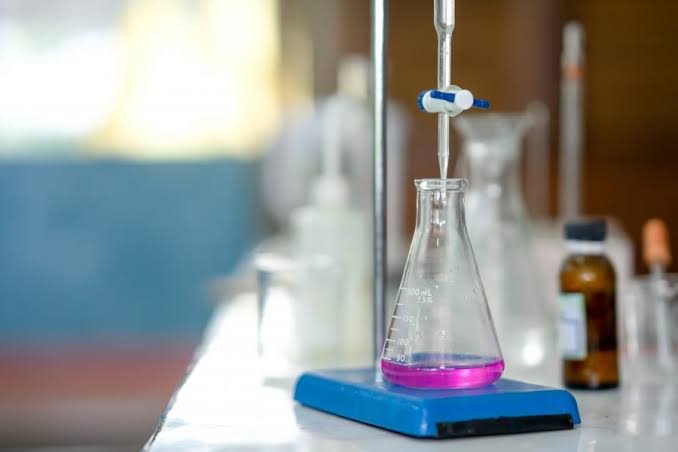
Titration is one of the most important analytical techniques used in chemistry laboratories to determine the concentration of an unknown solution. This method allows scientists to measure chemical quantities by reacting a solution with a known concentration against a solution whose concentration needs to be identified. Because it provides accurate and reliable measurements, titration is widely used in educational laboratories, research centers, pharmaceutical industries, and chemical manufacturing processes.
The importance of titration comes from its ability to provide precise results through a simple but controlled chemical reaction. By carefully measuring the amount of a known solution required to react completely with another solution, scientists can calculate unknown values. This makes titration an essential method for understanding chemical behavior and performing quantitative analysis in many scientific fields.
Titration is commonly studied by chemistry students because it demonstrates how reactions can be measured and controlled. It connects theoretical concepts such as concentration, molarity, and chemical equations with practical laboratory work. Understanding this technique helps learners develop important skills in measurement, observation, and scientific problem-solving.
What Is Titration: Definition and Meaning
Titration is a quantitative chemical analysis method used to determine the concentration of a specific substance in a solution. During this process, a solution with a known concentration, called the titrant, is gradually added to another solution, called the analyte. The reaction between these solutions allows scientists to calculate the unknown concentration accurately.
The main purpose of titration is to find how much of a chemical substance is present in a sample. The titrant is usually placed inside a burette, which allows precise control over the amount of liquid added. The analyte is placed in a flask, and the reaction continues until it reaches a point where the chemical substances have completely reacted.
Several important terms are connected with titration, including endpoint and equivalence point. The equivalence point represents the exact stage where the reacting substances are present in equal chemical amounts. The endpoint is the point detected by an indicator, usually through a visible color change, showing that the reaction is complete.
How Does Titration Work: Principle and Process
The principle of titration is based on a chemical reaction between two substances with known and unknown concentrations. Scientists use the measured volume of the titrant required to complete the reaction to determine the concentration of the analyte. This process depends on accurate measurements and a proper understanding of the chemical reaction taking place.
The titration process begins with preparing the solutions and laboratory equipment. A measured amount of the unknown solution is placed into a flask, while the known solution is added into a burette. The titrant is then slowly released into the flask while the solution is mixed carefully to allow the reaction to occur evenly.
During the experiment, an indicator or measuring device helps identify when the reaction reaches completion. The indicator changes color at the endpoint, showing that the correct amount of titrant has been added. After recording the volume used, scientists perform calculations to determine the unknown concentration.
Important Components Used in Titration
A successful titration experiment requires several laboratory tools that help ensure accurate results. The burette is one of the most important pieces of equipment because it allows scientists to add the titrant slowly and measure the exact volume delivered. This precision is necessary because even a small measurement error can affect the final calculation.
The flask holds the analyte solution where the chemical reaction takes place. A pipette is used to transfer a specific amount of solution into the flask because accurate volume measurement is essential for reliable results. These tools allow scientists to maintain control throughout the entire experiment.
Indicators also play an important role in titration. They help scientists identify the endpoint by producing a visible change, such as a color shift. Different indicators are selected depending on the type of chemical reaction being performed. The correct equipment and materials ensure that the titration process produces accurate and meaningful results.
Types of Titration and Their Uses
There are different types of titration methods, and each one is used for specific chemical reactions. Acid-base titration is one of the most common methods and is used to measure the concentration of acids or bases. During this process, an acid reacts with a base until neutralization occurs.
Redox titration is another important method that involves oxidation and reduction reactions. This type of titration measures electron transfer between chemical substances and is commonly used in analytical chemistry. It helps determine the concentration of substances involved in oxidation-reduction reactions.
Precipitation titration works by creating an insoluble solid during a chemical reaction. This method is often used to measure specific ions in a solution. Complexometric titration involves the formation of complexes between metal ions and special compounds. Each method has unique applications depending on the chemical properties of the substances being analyzed.
Titration Calculations: Formula and Examples
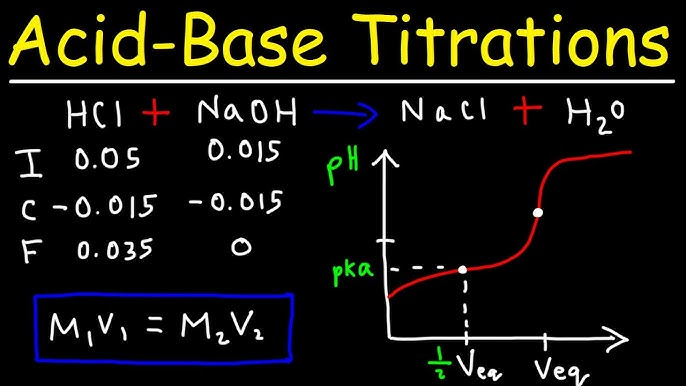
Titration calculations are important because they allow scientists to determine unknown concentrations using experimental data. The most common formula used in simple titration problems is M₁V₁ = M₂V₂. In this equation, M represents molarity, while V represents the volume of the solution.
To perform accurate calculations, scientists need reliable measurements from the experiment. The volume of titrant used during the reaction is recorded, and this information is combined with the known concentration to calculate the unknown value. Proper calculations help ensure that chemical analysis produces correct results.
For example, if the concentration of one solution is known and the amount used during the reaction is measured, scientists can calculate the concentration of the other solution. These calculations are widely used in chemistry classrooms, laboratories, and industrial applications where accuracy is required.
Common Titration Errors and How to Avoid Them
Accuracy is extremely important during titration because small mistakes can create incorrect results. Common errors include measuring incorrect solution volumes, adding titrant too quickly, selecting an unsuitable indicator, or stopping the reaction before reaching the correct endpoint. These mistakes can affect the final concentration calculation.
Scientists can improve accuracy by following proper laboratory procedures. Using clean equipment, carefully measuring solutions, and adding the titrant slowly near the endpoint can help reduce errors. Proper observation is also important because identifying the exact endpoint requires attention and patience.
Another important factor is choosing the correct indicator for the reaction. Different chemical reactions require different indicators, and using the wrong one may result in inaccurate readings. Careful preparation and proper technique help make titration experiments more reliable and successful.
Applications of Titration in Real Life
Titration has many important applications outside traditional chemistry classrooms. In the pharmaceutical industry, it is used to test the concentration and quality of medicines. Manufacturers use titration to ensure that products contain the correct amount of active ingredients and meet safety standards.
The food and beverage industry also uses titration to measure acidity levels and maintain product quality. Scientists can analyze products such as juices, dairy items, and other foods to ensure consistent taste and safety. This makes titration valuable for quality control processes.
Environmental scientists use titration to test water quality and measure chemical levels in samples. Industries also use this method to monitor chemical reactions and maintain accurate production standards. Because of its accuracy and flexibility, titration continues to be an essential scientific technique.
Conclusion
Titration is a fundamental chemistry technique that helps scientists measure unknown concentrations through controlled chemical reactions. It provides accurate results and supports important work in laboratories, industries, medicine, environmental studies, and scientific research.
Understanding titration involves learning its definition, principles, equipment, types, calculations, and practical uses. Each part of the process contributes to accurate analysis and helps scientists make reliable conclusions about chemical substances.
From basic classroom experiments to advanced industrial applications, titration remains one of the most useful methods in chemistry. Its ability to provide precise measurements makes it an essential tool for studying and controlling chemical reactions.
FAQs
What is titration in simple words?
Titration is a chemistry method used to find the concentration of an unknown solution by reacting it with a solution of known concentration.
What is the purpose of titration?
The purpose of titration is to measure the amount or concentration of a chemical substance accurately.
What are the main types of titration?
The main types include acid-base titration, redox titration, precipitation titration, and complexometric titration.
What is the endpoint in titration?
The endpoint is the stage where the reaction is considered complete, usually identified through a color change from an indicator.
What equipment is used in titration?
Common equipment includes a burette, pipette, flask, indicator, and standard solution.
What is the difference between endpoint and equivalence point?
The equivalence point is the exact chemical reaction stage, while the endpoint is the point detected by an indicator.
Why is titration important in chemistry?
Titration is important because it helps scientists accurately analyze chemical concentrations in laboratories and industries.
You May Also Read: Jo Malone Nectarine Blossom and Honey