


The Kongamato has fascinated explorers, researchers, and folklore enthusiasts for generations. Often described as a mysterious flying creature with features resembling a prehistoric reptile, it has become one of Africa’s most famous cryptids. Stories about the Kongamato continue to spark debate because they combine eyewitness accounts, indigenous traditions, and the possibility of an undiscovered species hidden within remote landscapes.
Unlike fictional monsters created for entertainment, the Kongamato is deeply connected to African oral history and cultural beliefs. Reports have emerged from wetlands and forests in Zambia, Angola, and the Democratic Republic of the Congo, where local communities have shared similar descriptions for decades. These consistent accounts have made the Kongamato an enduring subject of interest in both folklore and cryptozoology.
What Is Kongamato?
The Kongamato is widely recognized as a legendary flying cryptid that has captured global attention through stories passed down over many generations. Its name is commonly translated as “breaker of boats,” reflecting traditional tales that describe the creature attacking canoes or frightening travelers navigating rivers. Although scientific evidence remains unavailable, the legend continues to inspire curiosity among researchers and adventure seekers alike.
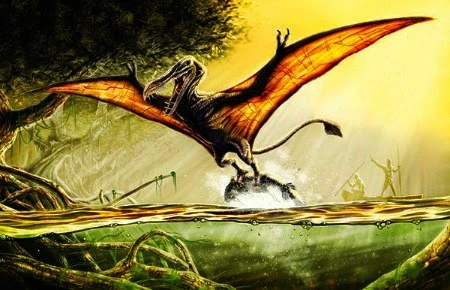
Eyewitness descriptions usually portray the Kongamato as having leathery wings, a long pointed beak filled with sharp teeth, and a body resembling ancient flying reptiles. Unlike birds, the creature is often described as lacking feathers, which explains why many people compare it to a pterosaur. These unique features have helped the Kongamato become one of Africa’s most recognizable legendary creatures.
The Origins of the Kongamato Legend
The legend of the Kongamato originated within indigenous communities living near the rivers and wetlands of Central Africa. Local tribes preserved these stories through oral traditions, warning travelers about dangerous creatures believed to inhabit isolated swamps. These tales became an important part of regional folklore, helping communities explain mysterious events occurring in remote natural environments.
During the early twentieth century, explorers, missionaries, and naturalists documented similar stories after speaking with local residents. Several reports described witnesses identifying illustrations of prehistoric pterosaurs as resembling the creature they had seen. While these observations did not provide scientific proof, they introduced the Kongamato to an international audience and strengthened its reputation as one of the world’s most intriguing cryptids.
Reported Kongamato Sightings
Numerous reports of the Kongamato have emerged over the past century, particularly from remote regions of Zambia, Angola, and the Democratic Republic of the Congo. Witnesses frequently describe seeing a large reddish creature flying above rivers before disappearing into dense vegetation. These encounters often occur in isolated locations where wildlife remains difficult to study and document.
Although many sightings rely entirely on eyewitness testimony, they continue to attract attention from cryptozoologists and researchers interested in unexplained animals. Some reports include remarkably similar descriptions despite occurring years apart and involving unrelated witnesses. This consistency has encouraged ongoing discussion about whether the Kongamato represents folklore, mistaken identification, or a creature yet to be scientifically documented.
What Does the Kongamato Look Like?
Descriptions of the Kongamato remain surprisingly consistent across different regions and historical accounts. Witnesses often describe a creature with broad leathery wings, a long narrow beak lined with sharp teeth, reddish or dark-colored skin, and a lengthy tail. Many reports estimate an impressive wingspan, giving the creature an intimidating appearance while flying over rivers or wetlands.
The Kongamato is commonly compared to prehistoric pterosaurs because of its reptilian characteristics rather than bird-like features. Unlike eagles or large bats, witnesses rarely mention feathers or fur, emphasizing instead the creature’s smooth skin and unusual wing structure. These descriptions have fueled theories suggesting the legend may have originated from encounters with unknown wildlife or exaggerated observations of familiar animals.
Is Kongamato Real?
The question of whether the Kongamato is real continues to divide researchers, scientists, and cryptozoology enthusiasts. Supporters believe that vast wetlands and unexplored forests in Central Africa could still hide unknown animal species. They point to eyewitness reports, indigenous traditions, and the region’s rich biodiversity as reasons to keep an open mind about the possibility of the creature’s existence.
Most scientists remain skeptical because no physical evidence has ever confirmed the Kongamato. There are no verified fossils, DNA samples, or high-quality photographs proving that such a creature survives today. Many experts suggest that witnesses may have mistaken large birds, fruit bats, or other native wildlife for an unusual flying animal, especially under poor visibility or stressful conditions.
Kongamato in Popular Culture
The mystery of the Kongamato has inspired writers, filmmakers, artists, and documentary producers around the world. Books about cryptids often feature the creature alongside famous legends such as Bigfoot and the Loch Ness Monster. Television programs and online videos also explore its history, reported sightings, and the ongoing debate about whether the legend has any basis in reality.
The internet has helped introduce the Kongamato to new audiences interested in folklore and unexplained mysteries. Discussion forums, podcasts, and social media platforms regularly feature conversations about eyewitness accounts and possible scientific explanations. This growing online interest has ensured that the Kongamato remains one of Africa’s most recognizable and frequently discussed cryptids.
Kongamato Compared with Other Legendary Creatures
The Kongamato is often compared with legendary flying creatures such as the Ropen from Papua New Guinea, the Thunderbird from Native American traditions, and the Jersey Devil from the United States. Each creature has unique cultural origins, yet they all share mysterious characteristics that continue to inspire stories, investigations, and speculation among believers and skeptics alike.
Unlike many mythical creatures created purely for entertainment, the Kongamato is closely connected to real geographic locations and long-standing oral traditions. This connection gives the legend additional cultural significance and encourages researchers to study both the folklore and the environmental conditions that may have contributed to these fascinating stories.
Why the Kongamato Still Fascinates People
The Kongamato continues to capture people’s imagination because it combines mystery, history, exploration, and the possibility of discovering something extraordinary. Humans have always been fascinated by stories of unknown creatures hiding in remote places, and the Kongamato perfectly represents that timeless curiosity. Every reported sighting adds another layer to a legend that refuses to disappear.
The creature also reminds us of the importance of respecting traditional knowledge and local storytelling. Even if future research proves that the Kongamato is purely legendary, the stories themselves remain valuable cultural treasures. They preserve the history, beliefs, and experiences of communities that have shared these remarkable tales for generations.
Conclusion
The Kongamato remains one of Africa’s most intriguing cryptids, blending ancient folklore with modern curiosity and scientific debate. Although no verified evidence has confirmed its existence, eyewitness accounts and indigenous traditions continue to inspire researchers and travelers alike. The enduring mystery surrounding the Kongamato demonstrates how folklore can shape our understanding of history, culture, and the natural world.
Whether viewed as a legendary flying monster, an undiscovered species, or a fascinating example of cultural storytelling, the Kongamato continues to attract worldwide attention. Exploring its history, reported sightings, and scientific theories allows readers to appreciate both Africa’s rich folklore and humanity’s endless fascination with unexplained mysteries hidden within nature.
FAQs
What is the Kongamato?
The Kongamato is a legendary flying cryptid from Central African folklore. It is commonly described as a large reptile-like creature with leathery wings and a long beak, often compared to an ancient pterosaur because of its unusual appearance.
What does the name Kongamato mean?
The name Kongamato is generally translated as “breaker of boats” or “overturner of boats.” This meaning comes from traditional stories describing the creature attacking small boats traveling through rivers and wetlands.
Is the Kongamato real?
There is currently no scientific evidence confirming the existence of the Kongamato. Most scientists consider it a legendary creature, while cryptozoology enthusiasts believe remote African regions may still hold undiscovered animal species.
Where has the Kongamato been reportedly seen?
Most reported Kongamato sightings have come from Zambia, Angola, and the Democratic Republic of the Congo. Witnesses usually describe encounters near rivers, marshes, and dense swamps where the environment remains difficult to explore.
Why is the Kongamato compared to a pterosaur?
Witnesses often describe leathery wings, a long tooth-filled beak, and reptilian features that resemble artistic reconstructions of prehistoric flying reptiles. These similarities have led many people to compare the Kongamato with extinct pterosaurs, although no evidence supports that theory.
You May Also Read: Szőfia Utca