

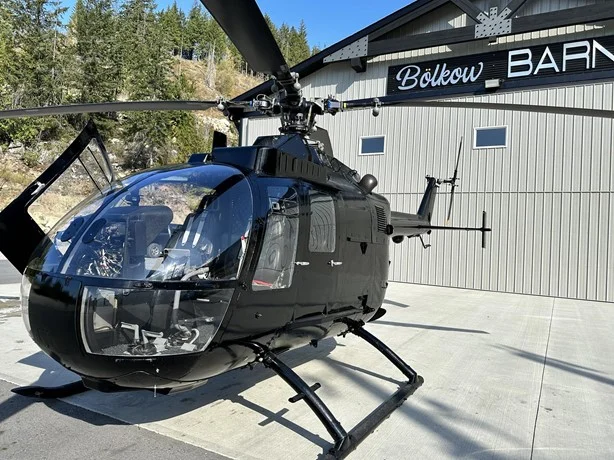
The MBB Bo 105 is one of the most iconic helicopters ever produced in Europe. Developed by the German aerospace company Messerschmitt-Bölkow-Blohm, this versatile rotorcraft transformed the helicopter industry through its innovative design and impressive performance. From military operations to civilian rescue missions, the aircraft demonstrated exceptional flexibility and reliability throughout its long service life.
Interest in the MBB Bo 105 remains strong among aviation enthusiasts, pilots, and historians. Its pioneering engineering, especially its rigid rotor system, helped set new standards for helicopter development. This guide explores the complete history, specifications, military service, and performance characteristics of the MBB Bo 105 while highlighting its lasting impact on modern aviation.
What Is the MBB Bo 105?
The MBB Bo 105 is a light twin-engine utility helicopter designed to perform a wide variety of missions. Introduced during the late 1960s, the aircraft was intended to provide reliable transportation, observation, rescue, and military support capabilities. Its compact design and dependable performance allowed operators to use it in both urban and remote environments.
Unlike many helicopters developed during the same period, the MBB Bo 105 featured advanced engineering solutions that improved handling and safety. The helicopter quickly gained recognition for its manoeuvrability and operational efficiency. These qualities helped it become one of the most successful helicopters produced in Germany and a respected aircraft throughout the global aviation community.
History of the MBB Bo 105
The story of the MBB Bo 105 began when German engineers sought to develop a modern helicopter capable of serving both civilian and military markets. The project focused on creating an aircraft that combined excellent performance with low operating costs. After years of development and testing, the prototype successfully completed its first flight in 1967.
Following certification, production expanded rapidly as international interest increased. Governments, emergency services, and private operators recognised the helicopter’s capabilities and versatility. Throughout the following decades, the aircraft was exported to numerous countries and established a reputation as one of the most dependable light helicopters available.
Design and Engineering Features
One of the most revolutionary aspects of the MBB Bo 105 is its rigid rotor system. Traditional helicopters relied on hinged rotor designs, but the Bo 105 introduced a rigid rotor configuration that offered exceptional responsiveness and precise flight control. This technological advancement significantly improved manoeuvrability and became one of the aircraft’s defining features.
The helicopter also incorporates a lightweight airframe and twin-engine arrangement. These features contribute to increased safety, improved reliability, and strong overall performance. The combination of advanced engineering and practical design allowed the MBB Bo 105 to excel in demanding operational environments where precision and dependability were essential.
Specifications of the MBB Bo 105
The MBB Bo 105 was designed to balance performance, efficiency, and operational flexibility. The helicopter features a rotor diameter of approximately 9.84 metres and can accommodate a pilot along with several passengers depending on the mission configuration. Its compact dimensions make it suitable for operations in confined spaces and challenging locations.
Performance specifications further demonstrate the aircraft’s capabilities. The helicopter achieves a cruising speed of around 204 kilometres per hour and can reach a maximum speed of approximately 242 kilometres per hour. With a range of roughly 575 kilometres, it provides sufficient endurance for transport, surveillance, and rescue missions across a wide variety of environments.
Performance and Flight Characteristics
The MBB Bo 105 became famous for its outstanding flight performance and exceptional agility. Pilots often praise the helicopter for its responsive controls and predictable handling characteristics. These qualities allow crews to operate safely in difficult conditions while maintaining confidence during demanding manoeuvres and complex missions.
Another unique aspect of the MBB Bo 105 is its aerobatic capability. Thanks to its rigid rotor system, the aircraft can perform advanced manoeuvres such as loops and rolls. Very few helicopters possess this capability, making the Bo 105 a favourite attraction at air shows and aviation demonstrations around the world.
Military Service and Combat Roles
Military organisations quickly recognised the value of the MBB Bo 105 following its introduction. The helicopter was employed in numerous roles, including reconnaissance, observation, command support, transport, and anti-tank operations. Its compact size and manoeuvrability made it highly effective in battlefield environments where flexibility was critical.
Several military variants were developed to meet specific operational requirements. Armed versions carried anti-tank missiles and advanced targeting systems, enabling them to engage armoured threats effectively. The aircraft served with armed forces across Europe, Asia, and other regions, demonstrating its adaptability and combat effectiveness.
Civilian Applications and Rescue Operations
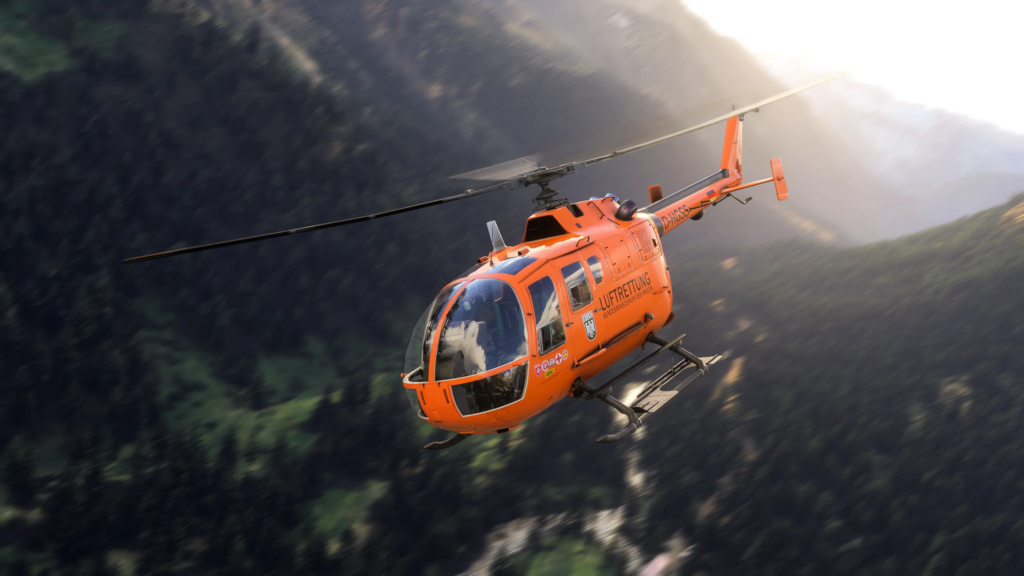
The success of the MBB Bo 105 extends far beyond military service. Emergency medical services adopted the helicopter because of its ability to reach accident scenes quickly and transport patients efficiently. Its compact dimensions and dependable performance made it particularly valuable for life-saving missions in urban and rural areas.
Police departments, offshore operators, and corporate transport services also benefited from the aircraft’s versatility. The helicopter proved capable of performing surveillance, search and rescue, passenger transport, and utility operations. These diverse applications contributed significantly to its popularity among civilian operators around the world.
Variants of the MBB Bo 105
Throughout its production life, the MBB Bo 105 evolved into numerous variants designed for specialised missions. Early models focused on transport and utility operations, while later versions introduced upgraded systems, improved performance, and enhanced mission capabilities. These developments allowed the aircraft to remain competitive in changing markets.
Military variants included armed reconnaissance and anti-tank platforms equipped with advanced weapons systems. Civilian versions were optimised for passenger transport, emergency medical services, and law enforcement activities. The wide variety of available configurations helped ensure the aircraft’s continued success across multiple sectors.
Legacy and Influence on Aviation
The influence of the MBB Bo 105 extends well beyond its operational career. The helicopter demonstrated the advantages of rigid rotor technology and inspired future generations of rotorcraft designers. Many concepts pioneered by the aircraft continue to influence modern helicopter engineering and development programmes today.
Aviation enthusiasts and historians often regard the helicopter as one of Germany’s greatest aerospace achievements. Its combination of innovation, reliability, and versatility created a lasting legacy that remains respected throughout the aviation industry. Museums and private collections continue to preserve examples of the aircraft as symbols of engineering excellence.
Conclusion
The MBB Bo 105 stands as a remarkable achievement in helicopter development and aviation history. Its innovative rotor system, dependable performance, and exceptional versatility allowed it to excel in military and civilian roles across the globe. Few helicopters have achieved such a broad range of operational success while maintaining a reputation for reliability and effectiveness.
Even decades after its introduction, the MBB Bo 105 continues to inspire admiration among pilots, engineers, and aviation enthusiasts. Its contributions to helicopter technology helped shape the future of rotorcraft design, ensuring that its legacy remains firmly established within the history of modern aviation.
FAQs
What is the MBB Bo 105?
The MBB Bo 105 is a German-built light twin-engine utility helicopter developed for military and civilian operations.
Why is the MBB Bo 105 famous?
It is famous for introducing a rigid rotor system and for being capable of performing aerobatic manoeuvres.
What is the maximum speed of the MBB Bo 105?
The helicopter can reach a top speed of approximately 242 kilometres per hour.
Was the MBB Bo 105 used in military service?
Yes, many armed forces used the helicopter for reconnaissance, transport, observation, and anti-tank missions.
Is the MBB Bo 105 still flying today?
Yes, some upgraded examples remain in service with civilian operators and specialised organisations around the world.
You May Also Read: 5.3 LS Bore and Stroke