


The electric vehicle industry is entering a decisive period. Automakers are introducing more affordable models, battery manufacturers are experimenting with new technologies, and governments are reconsidering the incentives that helped accelerate electric car adoption. Meanwhile, consumers are asking a practical question: are electric vehicles finally becoming a better choice for everyday driving?
The latest ev news reveals an industry balancing innovation with financial pressure. From Tesla and BYD to Rivian, Hyundai, and Volkswagen, manufacturers are competing to improve affordability, charging convenience, and driving range. Understanding these developments can help buyers, investors, and automotive enthusiasts separate meaningful progress from marketing promises.
EV News 2026: The Electric Vehicle Market Is Changing
The global electric vehicle market has expanded dramatically over the past decade. According to the International Energy Agency’s Global EV Outlook 2025, electric car sales exceeded 17 million worldwide in 2024, representing more than 20% of new car sales. China accounted for over 11 million of those sales, demonstrating the country’s dominant position in electric mobility. These figures include battery-electric vehicles and plug-in hybrids, an important distinction when comparing market reports. The growth reflects improvements in battery technology, greater model availability, government support, and changing consumer expectations.
However, expansion has not been consistent across every region. European markets have experienced changes in purchase incentives, while American buyers face uncertainty surrounding federal tax credits and vehicle affordability. China continues to benefit from extensive domestic manufacturing and strong competition among electric car brands. The latest ev news therefore requires a regional perspective rather than treating worldwide sales as one uniform trend. A manufacturer experiencing strong demand in China may face very different conditions in Europe or North America, where infrastructure, regulations, and consumer preferences influence purchasing decisions.
Tesla Faces Increasing Competition From Global Automakers
Tesla helped establish electric vehicles as desirable mainstream products rather than experimental alternatives. Its Model 3 and Model Y became important benchmarks for driving range, software integration, and charging convenience. However, the company now operates in a considerably more competitive market. Established manufacturers have expanded their electric portfolios, while Chinese brands are introducing vehicles with sophisticated technology and aggressive pricing. As a result, Tesla must compete on product quality, affordability, customer experience, and innovation rather than relying primarily on its early technological advantage.
The competitive landscape also highlights the importance of product development cycles. Consumers increasingly expect improved interiors, advanced driver-assistance systems, reliable software updates, and practical charging solutions. Tesla’s Supercharger network remains a significant asset, particularly as other manufacturers adopt compatible charging standards in North America. Nevertheless, access arrangements vary by vehicle and charging location. Buyers comparing Tesla with alternatives should examine real-world range, insurance costs, warranty coverage, service availability, and total ownership expenses instead of focusing exclusively on acceleration figures or advertised technology.
BYD and Chinese Manufacturers Are Reshaping EV Pricing
Chinese manufacturers have become influential participants in the global electric vehicle industry. BYD, which produces both battery-electric vehicles and plug-in hybrids, has developed extensive expertise in battery manufacturing and vehicle production. Its vertically integrated approach allows greater control over several important components, potentially supporting cost efficiency and faster product development. Other Chinese companies, including Geely, XPeng, and Nio, are competing through advanced vehicle software, distinctive designs, and expanding model portfolios. Their growth has intensified pressure on established automotive brands.
International expansion remains complicated by trade policies, tariffs, local regulations, and distribution requirements. A competitively priced vehicle in China may become considerably more expensive after import duties and market-specific compliance costs. Consequently, global ev news often involves industrial policy as much as automotive engineering. Consumers benefit when competition encourages better products and more attractive pricing, but market access determines which models are actually available. Prospective buyers should verify local availability, safety certifications, service arrangements, and warranty terms before considering unfamiliar international brands.
Battery Technology Is Becoming the Industry’s Main Battleground
Battery performance remains central to electric vehicle development because it influences driving range, charging speed, vehicle weight, and production costs. Lithium-ion batteries dominate the current market, with manufacturers using different chemical compositions to balance energy density, durability, safety, and affordability. Lithium iron phosphate batteries have gained popularity in many applications because they avoid nickel and cobalt in their cathodes and can offer favourable cost and longevity characteristics. Nickel-rich chemistries, meanwhile, remain attractive where higher energy density is a priority.
Solid-state batteries continue to attract attention because they could eventually improve energy density and certain safety characteristics. Companies such as Toyota, QuantumScape, and several battery manufacturers are researching different approaches. However, commercial production at automotive scale remains challenging, and laboratory results do not automatically translate into affordable consumer vehicles. The most useful ev news about battery innovation distinguishes proven production technology from prototypes and future targets. Buyers should prioritise verified battery warranties, charging performance, and real-world efficiency rather than delaying purchases indefinitely for technologies that may take years to reach mass production.
EV Charging Infrastructure Is Expanding and Improving
Charging availability has become one of the most important factors influencing electric vehicle adoption. Home charging provides convenience for drivers with suitable parking and electrical access, but apartment residents and people travelling long distances often depend on public infrastructure. Charging networks must therefore provide reliable equipment, straightforward payment systems, accurate availability information, and convenient locations. A large number of installed chargers does not necessarily guarantee a satisfactory experience if equipment frequently fails or charging stations remain inaccessible.
North America’s transition towards the SAE J3400 charging connector, commonly associated with Tesla’s North American Charging Standard, represents an important infrastructure development. Several automakers have adopted plans to support the connector, potentially reducing fragmentation between charging networks. However, compatibility still depends on vehicle hardware, adapters, software integration, and network permissions. Readers following ev news should check which charging stations their particular vehicle can use before travelling. Route planning applications, battery preconditioning, and realistic charging-time estimates can make long-distance electric driving considerably more predictable.
Affordable Electric Cars Are Becoming More Important
The next stage of electric vehicle adoption will depend heavily on affordability. Early EV buyers were often willing to pay a premium for new technology, but mainstream consumers typically compare monthly payments, insurance, maintenance, and resale values. Manufacturers must therefore offer vehicles that meet ordinary transportation needs without requiring luxury-car budgets. Smaller battery packs, simplified manufacturing, and shared vehicle platforms can help reduce production costs. However, lower prices should not come at the expense of safety, reliability, or essential equipment.
The International Energy Agency’s 2026 outlook indicates that electric car model availability could exceed 1,100 globally during the year. Approximately 150 new electric models were announced for 2026, although availability varies considerably between markets. This growing selection could make it easier for consumers to find vehicles suited to their budgets and lifestyles. The most meaningful ev news for many households may therefore involve an affordable family car with dependable charging access rather than a high-performance model featuring experimental technology.
Electric Vehicle Sales Show a Global Divide
The latest sales figures reveal a striking difference between major automotive markets. According to Reuters reporting on 8 October 2026, American electric vehicle sales declined 30.7% during the year through September, leaving EVs with approximately 6% of total US vehicle sales. The expiration of the previous federal purchase tax credit contributed to weaker demand. Meanwhile, hybrid vehicle sales increased as some consumers preferred technology that reduces fuel consumption without requiring routine external charging.
Europe presents a contrasting picture, with electric vehicles reaching approximately 23.2% of the market in the period covered by Reuters. Higher fuel costs, emissions regulations, purchase incentives, and wider model availability have supported adoption. The IEA also reported that worldwide electric car sales exceeded 20 million in 2025, representing approximately one-quarter of new passenger car sales. These differences show why regional context matters when interpreting ev news. A slowdown in one country does not necessarily indicate a worldwide decline in electric mobility.
Rivian R2 and New Electric SUVs Are Attracting Attention
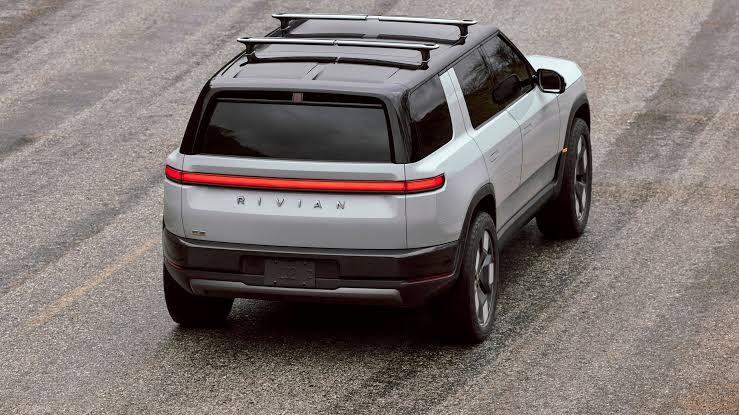
Rivian has become an important competitor in the American electric SUV market. Its R1T pickup and R1S SUV established the company’s reputation for adventure-oriented electric vehicles, but their premium positioning limited their potential audience. The smaller R2 represents an effort to reach more mainstream buyers. Its introduction also reflects a broader industry shift towards vehicles that combine everyday practicality with distinctive styling and advanced digital features. Manufacturers increasingly recognise that consumers want versatility rather than technological novelty alone.
Rivian reported 19,248 deliveries during the third quarter of 2026, exceeding analysts’ expectations. The company produced 19,751 vehicles during the same period and maintained its full-year delivery forecast of 65,000 to 70,000 vehicles. The R2 rollout contributed to this momentum, although profitability and production costs remain important challenges. For readers following ev news, Rivian’s performance illustrates how a well-positioned new model can attract customers even when the broader American electric vehicle market faces difficulties.
Electric Vehicle Batteries Are Becoming a Business Opportunity
Battery manufacturing is increasingly connected to industries beyond passenger vehicles. Companies such as LG Energy Solution, CATL, Panasonic Energy, and Samsung SDI supply technology for electric mobility while exploring opportunities in stationary energy storage. These systems can help businesses manage electricity consumption and support renewable energy integration. Growing demand from data centres and electricity networks creates opportunities for battery manufacturers to diversify their revenue sources rather than relying exclusively on automotive production.
In October 2026, LG Energy Solution indicated that its third-quarter operating profit had increased approximately 25.7% compared with the previous year. However, the company’s performance also benefited from tax credits and a one-time payment connected with an automotive customer. LG Energy Solution is expanding into energy storage systems as it responds to slower EV demand in certain markets. This development highlights an important business trend: battery manufacturers increasingly serve several energy-related industries, although diversification does not guarantee profitability.
Used Electric Vehicles Are Creating New Buying Opportunities
The used electric vehicle market is becoming increasingly relevant as early-generation models enter the second-hand market. Depreciation can make previously expensive electric cars more accessible, although resale values vary substantially by manufacturer, model, battery condition, and local demand. Buyers should examine the remaining battery warranty, service history, software support, and charging compatibility. A low purchase price may appear attractive, but unexpected repair costs or limited charging options can reduce the financial advantage.
Battery health is especially important when purchasing a used EV. Capacity generally declines gradually through ageing and use, although the rate depends on battery chemistry, temperature exposure, charging habits, and vehicle design. Prospective buyers should request available battery-health information and consider an independent inspection where appropriate. They should also verify whether important software features transfer to subsequent owners. Reliable ev news about the used market should focus on total ownership costs and long-term practicality rather than treating every discounted electric car as a bargain.
Government Policies Continue to Shape EV Adoption
Government decisions influence electric vehicle prices, manufacturing investment, charging infrastructure, and international competition. Purchase incentives can reduce initial costs, while emissions regulations encourage manufacturers to develop lower-emission vehicles. Tariffs and domestic manufacturing requirements also affect which products reach particular markets. These policies can change quickly, creating uncertainty for automakers planning expensive factories and consumers considering vehicle purchases. As a result, electric vehicle development is closely connected to economic policy and international trade.
The withdrawal of the previous US federal EV purchase credit illustrates how policy changes can influence demand. By contrast, European regulations and regional incentives continue to support electric vehicle adoption in several markets. China has developed a substantial domestic supply chain and competitive manufacturing environment. Consumers should confirm current local incentives before purchasing rather than relying on outdated promotional material. Businesses should likewise evaluate policy uncertainty when making long-term investment decisions. Understanding regulatory changes is essential to interpreting ev news accurately.
How to Choose the Right Electric Vehicle in 2026
Choosing an electric vehicle requires a realistic understanding of everyday driving habits. A commuter travelling relatively short distances may not need an expensive long-range model, particularly if dependable home charging is available. Conversely, drivers regularly travelling between cities should prioritise highway efficiency, charging speed, and access to reliable rapid chargers. Vehicle size, passenger capacity, luggage space, and local weather conditions also influence suitability. The most expensive model is not necessarily the best option for every household.
Buyers should compare total ownership costs rather than purchase prices alone. Electricity rates, insurance premiums, maintenance expenses, depreciation, financing terms, and charging installation costs all affect long-term affordability. A test drive can also reveal differences in visibility, comfort, regenerative braking, and digital controls. Reading independent reviews alongside official specifications provides a more balanced assessment. Staying informed through reliable ev news helps consumers recognise emerging options, but personal requirements should ultimately determine the purchasing decision.
The Future of Electric Vehicles Through 2030
Electric mobility is likely to become increasingly diverse during the remainder of the decade. Automakers are developing smaller city cars, family SUVs, electric commercial vehicles, and advanced battery systems. Improvements in charging reliability, manufacturing efficiency, and battery durability could make electric vehicles practical for more consumers. Meanwhile, smart charging and vehicle-to-grid technology may eventually allow compatible vehicles to interact more effectively with electricity networks, although widespread deployment depends on technical standards, regulations, and commercial arrangements.
The IEA’s Global EV Outlook 2026 projects approximately 23 million electric car sales worldwide during 2026, representing around 28% of total car sales. This is a forecast rather than a confirmed result, and economic conditions or policy changes could alter the outcome. Looking towards 2030, manufacturers must balance technological progress with affordability and infrastructure development. The future of electric transportation will depend not simply on producing more vehicles, but on creating reliable ownership experiences that meet the needs of a wider population.
Key Takeaways
The electric vehicle industry is experiencing rapid technological development alongside uneven regional demand. Global electric car sales exceeded 20 million in 2025, while the United States experienced a substantial slowdown during 2026. Europe and China remain important centres of electric mobility, supported by different combinations of consumer demand, manufacturing capacity, and government policies. Tesla, BYD, Rivian, and established automotive manufacturers continue to compete through pricing, vehicle technology, and product availability. Battery development and charging infrastructure remain essential to future adoption.
For consumers, affordability, charging convenience, battery reliability, and total ownership costs deserve greater attention than promotional claims. For manufacturers, efficient production and financial stability are becoming increasingly important. Investors should examine regional demand, competitive pressures, and actual financial results before drawing conclusions from individual announcements. Following ev news can provide useful insights, but meaningful decisions require comparing reliable evidence with personal requirements. The industry’s progress will ultimately be measured by how successfully electric vehicles serve ordinary drivers.
Conclusion
Electric vehicles have moved from a specialist automotive category into an important part of the global transportation market. Manufacturers are introducing more models, improving battery technology, and expanding charging networks, while consumers gain additional choices. Nevertheless, regional sales differences, changing government policies, and affordability challenges demonstrate that the transition is far from straightforward. The strongest companies will likely be those that combine reliable technology with competitive pricing, effective customer support, and sustainable business operations.
Whether you are considering your first electric car, researching automotive investments, or following technological innovation, understanding these developments can help you make better decisions. Continue exploring trusted ev news, compare official manufacturer information with independent research, and monitor changes in vehicle pricing, charging infrastructure, and battery performance. The electric vehicle market will continue evolving, and staying informed is one of the most practical ways to prepare for its next stage.
Frequently Asked Questions
What is the latest EV news in 2026?
Global EV sales are growing, while the US market faces weaker demand and changing incentives.
Which electric car companies are leading the market?
BYD and Tesla are major manufacturers, alongside Volkswagen, Geely, Hyundai, and other established brands.
Are electric cars becoming cheaper?
More affordable models are entering the market, although prices vary by country, manufacturer, and configuration.
How long do electric vehicle batteries last?
Many manufacturers offer battery warranties of around eight years, although actual battery life varies.
Is 2026 a good year to buy an electric vehicle?
It can be, especially with suitable charging access and competitive pricing. Compare total ownership costs first.
You May Also Read: Rivian News