

The creative industry is experiencing one of its most significant transformations in decades. Artificial intelligence can generate visuals within seconds, brands are reconsidering their identities, and designers are discovering new ways to combine technology with human imagination. Yet behind the excitement lies an important question: what does the future hold for creative professionals?
Following graphic design news has become essential for anyone working in branding, digital marketing, visual communication, or creative technology. From emerging design tools to changing consumer expectations, understanding these developments helps businesses and designers make informed decisions in an increasingly competitive visual landscape.
Why Graphic Design News Matters More Than Ever
Graphic design has evolved far beyond creating attractive logos, posters, and advertising materials. Today, it influences how people experience websites, interact with applications, recognise brands, and interpret information. As digital platforms expand, visual communication plays a central role in shaping customer perceptions and purchasing decisions. Businesses increasingly expect designers to understand technology, accessibility, user behaviour, and commercial objectives alongside traditional creative principles. This expanding responsibility makes industry awareness an important professional skill rather than an optional interest.
Keeping up with graphic design news also helps professionals identify changes before they become established industry standards. A new design application might improve production efficiency, while an emerging visual trend could influence a company’s next branding campaign. However, not every popular technique deserves immediate adoption. Successful designers distinguish lasting developments from temporary fashions by examining practical applications, audience needs, and measurable results. This balanced approach allows creative teams to experiment confidently without sacrificing clarity, consistency, or their distinctive visual identity.
Artificial Intelligence Is Transforming Creative Workflows
Artificial intelligence has moved from experimental demonstrations into everyday creative production. Tools such as Adobe Firefly, Canva’s AI features, and generative image systems allow users to produce visual concepts, explore compositions, and modify existing assets through written instructions. These capabilities can shorten early brainstorming stages and make certain repetitive tasks more manageable. Nevertheless, generating an image is not equivalent to solving a design problem. Professional designers must still evaluate typography, composition, cultural meaning, originality, accessibility, and whether the final result communicates the intended message.
The biggest change involves how designers allocate their time. Instead of manually producing every initial variation, creative professionals can experiment with multiple directions before refining a selected concept. This creates opportunities for smaller businesses that previously lacked substantial production resources. At the same time, AI introduces questions about intellectual property, training data, commercial licensing, and visual authenticity. Organisations adopting generative tools need clear policies governing asset approval, human review, and responsible use. Creative judgement remains essential because faster production does not automatically produce stronger communication.
Adobe, Figma, and Canva Are Redefining Design Software
Professional design software increasingly combines traditional editing capabilities with automation, collaboration, and AI-assisted production. Adobe’s Creative Cloud ecosystem brings together applications such as Photoshop, Illustrator, and InDesign, while Firefly supports generative workflows. Figma has established an important role in collaborative interface design, particularly where designers and developers need shared components and design systems. Canva, meanwhile, continues to make visual production more accessible to marketing teams, educators, entrepreneurs, and people without extensive technical training.
These developments reveal a broader shift towards connected creative workflows. Businesses no longer want isolated design files that require complicated transfers between departments. Instead, they need reusable templates, shared brand assets, faster feedback, and consistent outputs across websites, presentations, advertising, and social platforms. For professionals following graphic design news, software announcements are most valuable when assessed against real production needs. Before adopting a new feature, teams should consider compatibility, pricing, accessibility, data handling, and whether the change genuinely improves collaboration or merely adds another layer of complexity.
Brand Identity Design Is Becoming More Flexible
Traditional brand identity systems often relied on fixed logos, limited colour palettes, and carefully controlled layouts. Although consistency remains important, contemporary brands must communicate across a much wider range of environments. A visual identity may appear on a smartwatch, a mobile application, a physical product, a video advertisement, and a large outdoor display. Each format creates different technical requirements. As a result, designers increasingly develop flexible identity systems that preserve recognisable characteristics while adapting to changing dimensions, screen conditions, and communication contexts.
This flexibility does not mean abandoning established branding principles. Strong identities still require clear positioning, distinctive visual elements, and consistent customer experiences. However, responsive logos, adaptable typography, motion graphics, and modular layouts can help brands communicate effectively across multiple channels. Businesses should evaluate whether their identity remains understandable at small sizes, works without animation, and supports accessible colour combinations. The most effective visual systems combine creative expression with practical reliability, ensuring that audiences recognise the organisation regardless of where its message appears.
Typography Trends Are Bringing Personality Back to Design
Typography has become an increasingly expressive part of contemporary visual communication. Designers are experimenting with oversized headlines, variable fonts, contrasting typefaces, and distinctive letterforms to establish stronger visual identities. Variable font technology is particularly useful because a single font file can support different weights, widths, or other supported variations. This flexibility helps designers create responsive interfaces while potentially reducing the need for multiple separate font files. Nevertheless, technical benefits depend on the chosen typeface, implementation, and platform support.
Expressive typography works best when personality does not compromise readability. A dramatic headline might attract attention, but unclear body text can quickly frustrate readers. Designers must consider line spacing, contrast, font size, language support, and mobile rendering. Accessibility guidance from the World Wide Web Consortium provides an important foundation for these decisions. Typography should also reflect the brand’s communication style rather than simply imitate a fashionable visual treatment. When chosen carefully, distinctive lettering strengthens recognition while making information easier to understand and navigate.
Minimalism and Maximalism Are Developing Side by Side
One of the most interesting developments in visual culture is the continued popularity of contrasting design approaches. Minimalism prioritises simplicity, purposeful spacing, restrained colour, and clear information hierarchy. Maximalism embraces expressive typography, layered imagery, complex textures, and energetic compositions. Neither approach is universally superior. Their effectiveness depends on audience expectations, brand positioning, communication objectives, and the environment in which a design appears. A financial dashboard and an experimental music festival poster, for example, serve very different purposes.
Rather than choosing a style solely because it is fashionable, designers should examine how visual complexity affects understanding. Minimalist interfaces can reduce distractions, but excessive simplification may hide useful information or make navigation ambiguous. Maximalist compositions can create memorable experiences, although uncontrolled visual density may overwhelm users. Successful creative work often borrows selectively from both approaches. A brand might use expressive campaign imagery while maintaining a straightforward website interface. This strategic combination demonstrates why design decisions should respond to context instead of rigid stylistic rules.
The Latest Graphic Design News and Industry Developments
Recent product announcements illustrate how rapidly creative technology is changing. At Adobe MAX in October 2025, Adobe introduced expanded AI capabilities across Creative Cloud, including Firefly Image Model 5 and conversational assistants. These announcements demonstrated a growing emphasis on combining automated content generation with professional editing controls. Adobe also highlighted tools for large-scale image production, addressing the increasing demand for marketing materials across multiple digital channels. Such developments show how software companies are responding to pressure for faster creative production.
Meanwhile, Figma’s Config 2026 event introduced new creative capabilities involving motion, shaders, code layers, and generative plugins. On 6 October 2026, Figma also announced that its design agent had become generally available, with improvements to collaboration and design-library guidance. These updates are particularly relevant to interface designers and multidisciplinary teams. Together, they suggest that graphic design news is increasingly connected to software development, automation, and interactive experiences rather than traditional image production alone.
Motion Graphics and Interactive Design Are Expanding
Static imagery remains important, but digital communication increasingly incorporates animation, transitions, and interactive elements. Motion graphics can explain complicated ideas, direct attention, and help audiences understand relationships between information. Brands use animation in product demonstrations, social advertisements, application interfaces, and educational content. For designers, this creates opportunities to work beyond conventional layouts and explore storytelling through movement. However, effective animation requires careful timing, clear purpose, and an understanding of how different devices reproduce visual effects.
The development of integrated motion tools could make animation more accessible to professionals who primarily work with static designs. Figma Motion, announced in June 2026, reflects this direction by bringing timeline-based animation into the design environment. Nevertheless, movement should support usability rather than distract from it. Designers must also consider users who experience discomfort from excessive animation. Providing reduced-motion alternatives and avoiding unnecessary visual effects helps create more inclusive digital experiences.
Sustainable Design Is Influencing Creative Decisions
Environmental responsibility is becoming an important consideration in branding, packaging, publishing, and digital production. Designers can influence material choices, printing requirements, product durability, and the amount of waste generated during production. In packaging design, for example, reducing unnecessary components may simplify manufacturing and transportation. Digital designers can also consider efficient media formats, restrained animation, and appropriately sized images. Although these decisions differ in their environmental impact, they demonstrate how visual communication connects with broader sustainability objectives.
Sustainable graphic design requires more than using natural colours or adding environmental symbols to packaging. Genuine improvements depend on production methods, materials, supply chains, and measurable outcomes. Designers should ask suppliers about recycled content, certifications, printing processes, and disposal requirements before making environmental claims. Businesses should also avoid presenting unverified sustainability promises as established facts. As consumers become more attentive to corporate responsibility, transparent communication and evidence-based design decisions can help organisations build credibility without relying on misleading green marketing.
Accessibility Is Becoming a Core Design Requirement
Accessible design ensures that visual information can be understood and used by people with different abilities and needs. This includes readers with low vision, colour-vision differences, cognitive disabilities, and motor impairments. Important considerations include sufficient colour contrast, readable typography, meaningful alternative text, logical content hierarchy, and controls that remain usable without precise pointer movements. Accessibility is especially important for websites and applications because poor design decisions can prevent people from completing essential tasks.
The World Wide Web Consortium published WCAG 2.2 as a formal recommendation in October 2023, adding nine success criteria compared with WCAG 2.1. These guidelines provide practical standards for improving digital accessibility. Designers can begin by testing colour combinations, reviewing keyboard navigation, and checking layouts at different screen sizes. Accessibility should be integrated into the earliest design stages rather than treated as a final correction. This approach often produces clearer experiences for everyone, not only users with recognised disabilities.
Graphic Design Careers Are Facing New Opportunities and Pressures
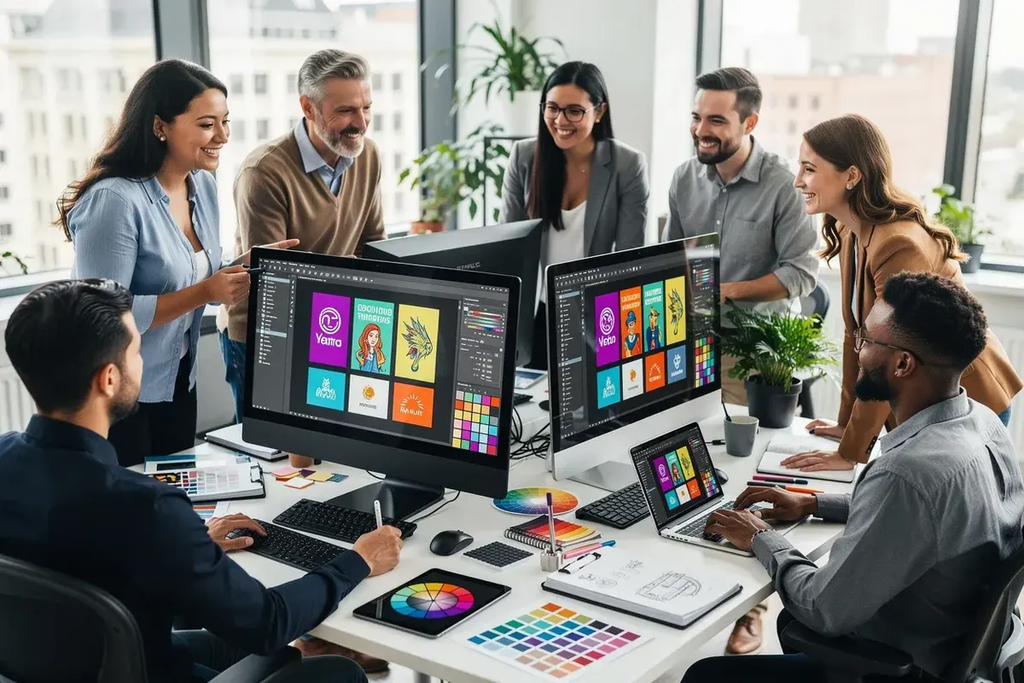
The relationship between creative technology and employment is becoming more complicated. Automation can reduce the time required for certain production tasks, while new digital experiences create demand for specialised knowledge. Designers who understand user experience, brand strategy, motion design, and creative automation may be better positioned to contribute across different business functions. However, technical versatility alone is not enough. Employers and clients still need professionals who can interpret briefs, communicate ideas, manage feedback, and connect visual decisions to commercial objectives.
Labour-market data offers useful context. The US Bureau of Labor Statistics reports median annual pay of $62,960 for graphic designers in its latest occupational profile and projects a 2% employment decline over the 2024–2034 period. These figures describe the American labour market rather than worldwide opportunities, and outcomes differ by specialisation. For anyone following graphic design news, the practical lesson is to develop adaptable skills while building a portfolio that demonstrates problem-solving, originality, and measurable project contributions.
How Businesses Can Respond to Changing Design Trends
Businesses should approach emerging design trends as opportunities for improvement rather than instructions to redesign everything immediately. Before adopting a new visual style, organisations need to understand their audience, brand positioning, and existing communication challenges. A modern appearance can attract attention, but frequent identity changes may weaken recognition. The most productive starting point is a visual audit covering logos, typography, colour systems, website usability, advertising materials, and consistency across customer touchpoints.
After identifying weaknesses, businesses can test improvements through manageable projects. A company might compare two landing-page layouts, update outdated presentation templates, or introduce more accessible typography. Performance can be evaluated using conversion rates, task completion, customer feedback, and engagement measures appropriate to the project. Designers should document the reasoning behind each decision rather than judging success through appearance alone. This evidence-based process helps businesses invest in improvements that support customer needs while avoiding unnecessary expenditure on short-lived visual fashions.
The Future of Graphic Design Beyond 2026
The next phase of creative technology will likely involve closer integration between design applications, generative AI, and software development. Designers may increasingly use conversational interfaces to explore ideas, automate production tasks, and create interactive prototypes. Developments involving reusable components, personalised content, and connected creative systems could also change how organisations manage large collections of visual assets. These are plausible directions rather than guaranteed outcomes, and their adoption will depend on reliability, cost, licensing, and professional acceptance.
Human expertise is likely to remain central to the most valuable creative decisions. Technology can accelerate experimentation, but it cannot independently establish a company’s purpose, understand every cultural nuance, or guarantee that a message will resonate with its intended audience. Designers who combine strategic thinking with technological fluency will have more ways to contribute. Following graphic design news can help professionals recognise emerging opportunities, although long-term success will depend on continuously testing new methods against established principles of communication, usability, and trust.
How to Stay Updated With Reliable Graphic Design News
Finding trustworthy information requires more than following popular social media accounts. Official product announcements from Adobe, Figma, and Canva provide useful details about software changes, while established design publications offer industry commentary and creative examples. Professional organisations, accessibility resources, and educational institutions can provide additional perspectives. Readers should distinguish confirmed product releases from experimental previews, promotional claims, and speculative predictions. This distinction matters because an announced feature may remain unavailable to some users or require a particular subscription.
A practical learning routine can make industry research more manageable. Designers can review major announcements weekly, select one relevant technique to investigate, and test promising developments through small projects. Maintaining a personal collection of case studies, useful tools, and documented experiments also creates a valuable professional reference. Instead of reacting to every trending visual style, focus on developments that improve creativity, accessibility, productivity, or audience understanding. This selective approach turns graphic design news into a source of practical knowledge rather than a constant stream of distractions.
Key Takeaways
The most significant development in contemporary graphic design is the convergence of creative judgement, digital technology, and business strategy. AI-assisted tools are changing production workflows, while collaborative platforms are connecting designers more closely with developers and marketing teams. Typography, responsive branding, motion graphics, and accessibility remain important areas of professional development. At the same time, employment projections demonstrate that technological progress does not automatically translate into growth across every traditional creative occupation.
For designers, the most useful response is continuous learning supported by practical experimentation. For businesses, the priority should be investing in visual communication that improves recognition, usability, and customer understanding. Both groups benefit from questioning exaggerated claims and evaluating tools according to real results. Following graphic design news regularly provides context for these decisions, but professional judgement determines which developments deserve attention. Strong design remains rooted in clear communication, thoughtful execution, and an understanding of the people it serves.
Conclusion
Graphic design is entering a period in which creativity and technology are becoming increasingly interconnected. Artificial intelligence, collaborative software, responsive branding, and interactive experiences are changing how visual ideas move from initial concepts to finished products. Although these developments offer considerable opportunities, they also create challenges involving originality, accessibility, employment, and responsible technology use. Designers who understand these issues can make more informed decisions and contribute meaningfully to the organisations and audiences they serve.
The future will not be shaped by software alone. It will depend on professionals who combine imagination, research, communication skills, and a willingness to adapt. Whether you are an experienced designer, business owner, marketing specialist, or creative beginner, staying informed is an investment in better decisions. Continue exploring reliable graphic design news, experiment with relevant tools, study successful projects, and apply what you learn to create visual experiences that are useful, distinctive, and built to last.
Frequently Asked Questions
What is graphic design news?
It covers updates about design trends, creative software, branding, technology, and the professional design industry.
What are the biggest graphic design trends in 2026?
AI-assisted design, motion graphics, flexible branding, expressive typography, and accessible digital experiences.
Will AI replace graphic designers?
AI can automate some tasks, but creative judgement, strategy, and human communication remain important.
Which software is popular among graphic designers?
Adobe Photoshop, Illustrator, InDesign, Figma, and Canva are widely used for different creative tasks.
Where can I find reliable graphic design news?
Official Adobe and Figma announcements, established design publications, and professional design organisations are useful sources.
You May Also Read: YouTube.com Chrome