

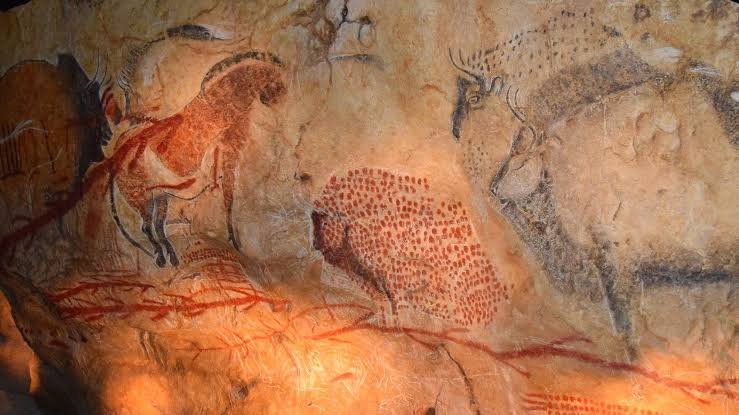
Deep inside dark underground chambers, far away from modern cities and technology, early humans created images that still speak to us thousands of years later. These drawings of animals, symbols, and human marks reveal a fascinating chapter of human creativity and imagination. Cave art is more than ancient decoration; it is a visual record of how prehistoric people understood nature, survival, spirituality, and their place in the world.
From the famous paintings of Lascaux in France to the remarkable discoveries in Indonesia, these ancient artworks continue to change how researchers understand human intelligence and symbolic thinking. Scientists believe these creations demonstrate that early societies possessed advanced observation skills, artistic techniques, and cultural traditions long before written history began.
Understanding the Meaning and Origins of Cave Art
Cave art refers to prehistoric paintings, engravings, and markings created on cave walls and rock surfaces by ancient humans. These artworks are among the oldest examples of human expression and provide valuable information about prehistoric communities. Researchers study these images to understand ancient lifestyles, environmental conditions, hunting practices, and cultural beliefs.
The earliest examples of this form of prehistoric expression date back tens of thousands of years. Famous locations such as Chauvet Cave in France contain artwork associated with the Aurignacian period, with some paintings dated around 36,000 years ago. These discoveries challenged older assumptions that artistic ability developed slowly over time.
Ancient artists used natural materials such as charcoal, mineral pigments, and ochre to create images on stone surfaces. Their techniques included painting, engraving, spraying pigment, and using the natural shape of cave walls to create depth. These methods show remarkable creativity and careful planning.
The Historical Importance of Ancient Cave Paintings
The discovery of prehistoric artwork transformed the understanding of early human civilization. Before archaeological research developed, many people believed prehistoric humans were mainly focused on survival. However, these discoveries revealed a much more complex picture of ancient societies.
Sites such as Lascaux and Altamira showed that early humans created detailed representations of animals, symbols, and patterns. Lascaux, discovered in France in 1940, contains hundreds of paintings and engravings that provide evidence of sophisticated artistic abilities during the Ice Age.
These discoveries also helped scientists explore questions about human creativity, imagination, and communication. Researchers now understand that symbolic thinking existed much earlier than previously believed, showing that prehistoric communities had rich cultural traditions.
Famous Cave Art Sites Around the World
Several archaeological sites have become internationally recognized because of their exceptional prehistoric artwork. Chauvet Cave in southern France is considered one of the oldest decorated caves in Europe. It contains hundreds of animal images, including lions, mammoths, horses, and rhinoceroses.
Lascaux Cave is another famous location known for its detailed animal paintings. The artwork includes bulls, horses, deer, and other species that lived during the Ice Age. Because of conservation concerns, the original cave has limited public access, allowing scientists to protect these fragile paintings.
Beyond Europe, discoveries in Southeast Asia have expanded the global story of prehistoric creativity. Research on Indonesian caves has revealed extremely old paintings and hand stencils, showing that artistic expression was not limited to one region.
The Animals and Symbols Found in Cave Art
Animals are among the most common subjects found in prehistoric artwork. Ancient artists frequently depicted horses, bison, deer, lions, mammoths, and other creatures that surrounded their environment. These images provide clues about the animals that existed during different prehistoric periods.
Scientists continue debating why certain animals appeared more frequently than others. Some researchers believe these images may have been connected to hunting rituals, spiritual beliefs, storytelling, or attempts to understand the natural world. The true meaning may have varied between different communities.
Symbols are another important element of cave art. Simple lines, dots, handprints, and geometric patterns appear alongside animal drawings in many locations. Some researchers believe these markings could represent early forms of communication, although their exact meanings remain uncertain.
How Ancient Humans Created Cave Paintings
Creating prehistoric artwork required knowledge, preparation, and technical skill. Early artists collected pigments from minerals, plants, charcoal, and other natural materials. They mixed these substances with liquids or binders to create paints that could stick to stone surfaces.
Many artists used the natural curves and textures of cave walls to enhance their images. A raised section of rock could become part of an animal’s body, while shadows created movement and depth. These techniques demonstrate that prehistoric artists carefully considered their surroundings before creating their work.
The tools used for cave art included simple brushes made from animal hair, fingers, bones, and stone tools. Some artists also used methods such as blowing pigment around their hands to create stencils, producing some of the earliest known human hand images.
Why Did Early Humans Create Cave Art?
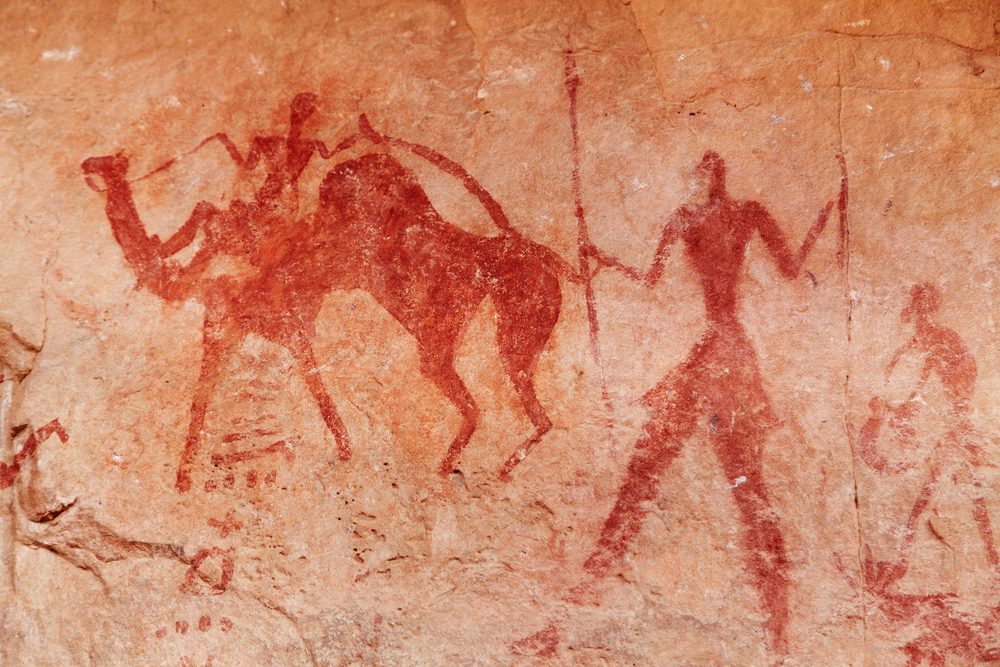
The purpose of prehistoric artwork remains one of archaeology’s greatest mysteries. Some experts suggest that these images had spiritual or symbolic meanings, while others believe they helped communities share knowledge about animals and survival.
One theory suggests that cave art may have been connected to rituals or ceremonies. Deep cave locations, where many paintings were discovered, may have been chosen because they had special cultural significance. However, researchers acknowledge that there is no single explanation that applies to every site.
Another possibility is that these artworks represented storytelling. Images may have preserved important memories, described experiences, or helped younger generations understand their environment. Whatever the original purpose, these creations demonstrate advanced human imagination.
The Role of Cave Art in Understanding Human Evolution
The study of prehistoric artwork has changed how scientists view human development. These discoveries show that early humans were capable of abstract thinking, creativity, and complex communication.
Archaeologists use artwork alongside other evidence, including tools, bones, and settlement remains, to understand ancient societies. Together, these sources reveal how humans adapted to changing climates and environments over thousands of years.
Modern research methods, including digital scanning, radiocarbon dating, and 3D modeling, have allowed scientists to examine fragile sites without damaging them. These technologies continue to reveal new information about prehistoric creativity and human evolution.
Modern Technology and the Preservation of Ancient Art
Protecting ancient artwork is one of archaeology’s biggest challenges. Exposure to visitors, humidity changes, and environmental conditions can damage delicate paintings. For this reason, many important sites have strict conservation rules.
Technology has become essential in preserving these historical treasures. Researchers now use digital mapping, virtual reality experiences, and high-resolution imaging to study and share ancient artwork without putting original sites at risk.
The preservation of cave art allows future generations to explore humanity’s earliest creative achievements. Virtual tours and detailed replicas also provide educational opportunities while protecting original locations.
Recent Discoveries and the Future of Cave Art Research
New discoveries continue to expand scientific understanding of prehistoric creativity. Archaeologists regularly find new decorated caves, especially in regions where research has increased in recent decades.
Recent findings in Indonesia have challenged the traditional focus on European sites by revealing very old examples of symbolic human expression. These discoveries suggest that artistic traditions developed across different parts of the world.
Future research will likely combine archaeology with artificial intelligence, digital technology, and advanced dating methods. These tools may help scientists analyze symbols, identify artistic techniques, and uncover more information about ancient cultures.
Key Takeaways
- Cave art represents some of humanity’s oldest examples of creativity and symbolic expression.
- Ancient artists used natural pigments and advanced techniques to create detailed images.
- Famous sites such as Chauvet and Lascaux reveal important information about prehistoric societies.
- Animal images and symbols provide clues about ancient beliefs and environments.
- Modern technology plays a major role in preserving and studying these fragile artworks.
Conclusion
Cave art remains one of the most powerful connections between the modern world and ancient humanity. These images remind us that creativity, imagination, and storytelling are not recent developments but fundamental parts of human identity.
Thousands of years after their creation, prehistoric paintings continue to inspire scientists, artists, and explorers. They show that early humans were not only survivors but also thinkers, creators, and storytellers who wanted to leave their mark on history. Exploring these ancient masterpieces helps us better understand where we came from and how human expression has evolved.
Frequently Asked Questions
What is cave art?
Cave art is prehistoric artwork created on cave walls and rock surfaces using paintings, engravings, and natural pigments.
How old is cave art?
Some examples of cave art are more than 30,000 years old, with certain discoveries dating back even earlier.
Why did ancient humans create cave art?
Researchers believe it may have been used for storytelling, rituals, communication, or expressing cultural beliefs.
What materials were used to make cave paintings?
Ancient artists used natural pigments such as charcoal, ochre, minerals, and plant materials.
Where can famous cave art sites be found?
Famous sites include Chauvet and Lascaux in France, Altamira in Spain, and prehistoric caves in Indonesia.
Why is cave art important today?
It helps scientists understand early human creativity, culture, environment, and the development of symbolic thinking.
You May Also Read: Words That Start With F