


Female serial killers have long challenged popular assumptions about violent crime. Although serial murder is more commonly associated with men, history includes women who repeatedly killed relatives, patients, spouses, children, acquaintances, and strangers. Their motives ranged from financial gain and personal control to revenge and psychological gratification. Examining these cases reveals how opportunity, trust, social roles, and access to vulnerable victims sometimes allowed repeated crimes to remain hidden for years.
This article examines 15 of the most notorious female serial killers in history, including Aileen Wuornos, Belle Gunness, Mary Ann Cotton, Nannie Doss, and Dorothea Puente. Rather than focusing only on sensational details, it explores their backgrounds, known crimes, methods, motives, and eventual capture. Because historical records sometimes contain disputed victim totals, confirmed convictions and credible estimates should always be distinguished from speculation when discussing these cases.
What Makes Female Serial Killers Different?
Researchers studying female serial killers have identified patterns that sometimes differ from those commonly associated with male offenders. Women who repeatedly kill have often targeted people already within their social circles, including husbands, relatives, patients, children, or people dependent on their care. Poisoning has appeared in numerous historical cases because it could resemble illness, especially before modern forensic medicine made toxic substances easier to detect during criminal investigations.
Financial gain has also appeared repeatedly as a motive among notorious women serial killers. Insurance payments, property, inheritance, and control over victims’ money have played roles in several famous cases. Other offenders reportedly killed for personal gratification, revenge, or control. These patterns are not universal, however, and each offender’s circumstances differ. Aileen Wuornos, for example, became unusual among well-known female killers because her victims were adult male strangers encountered on Florida highways.
Aileen Wuornos, Belle Gunness, and Mary Ann Cotton
Aileen Wuornos is probably one of the most recognizable female serial killers in American popular culture. She was convicted of murdering men in Florida after a series of shootings between 1989 and 1990. Wuornos claimed that some killings occurred in self-defense, but prosecutors challenged her account. She was eventually sentenced to death and executed in Florida in 2002. Her life later inspired documentaries, books, and the Oscar-winning film Monster.
Belle Gunness and Mary Ann Cotton became notorious generations earlier. Gunness, a Norwegian-born woman living in Indiana, was suspected of killing several people connected to her farm, including men who responded to marriage advertisements. Cotton, meanwhile, became one of Victorian Britain’s most infamous suspected poisoners. She was convicted of murdering her stepson and has been linked historically to numerous deaths among husbands, children, and relatives, although some claimed totals remain disputed.
Nannie Doss, Dorothea Puente, and Judy Buenoano
Nannie Doss became known by nicknames such as the “Giggling Granny” after authorities connected her to multiple family deaths. Born in Alabama in 1905, Doss eventually confessed to killing several relatives, including husbands. Poison was central to her known crimes. Her case fascinated the American public because her cheerful public behavior contrasted sharply with the calculated murders investigators uncovered. She received a life sentence and died in prison in 1965.
Dorothea Puente and Judy Buenoano were also linked to crimes involving money and people close to them. Puente operated a boarding house in Sacramento, California, where investigators discovered bodies buried on the property in 1988. Buenoano was convicted of killing her husband and son and attempting to kill another partner. Authorities connected insurance benefits to her crimes, making her case a frequently cited example of financially motivated female serial murder in America.
Jane Toppan, Kristen Gilbert, and Genene Jones
Jane Toppan represents one of the earliest widely documented American cases involving a female healthcare worker who became a serial killer. Working as a nurse in Massachusetts during the late nineteenth century, Toppan gained access to vulnerable patients and used drugs while experimenting with dosages. After several suspicious deaths, investigators eventually exposed her actions. She was found not guilty by reason of insanity and spent the remainder of her life in a psychiatric institution.
Healthcare settings also became central to the cases of Kristen Gilbert and Genene Jones. Gilbert, a nurse at a Veterans Affairs medical center in Massachusetts, was convicted of killing patients under her care. Jones, a pediatric nurse in Texas, was convicted in cases involving children and was suspected in additional deaths. Their crimes demonstrate why unexplained medical emergencies can become especially difficult to investigate when the offender has professional knowledge and trusted access.
Amelia Dyer, Miyuki Ishikawa, and Leonarda Cianciulli
Amelia Dyer became infamous in Victorian England for crimes connected to “baby farming,” a practice in which people accepted payment to care for infants. Dyer murdered babies entrusted to her and was eventually arrested after investigators connected a child’s body to her. She was convicted and executed in 1896. Estimates of her total victims vary dramatically, so responsible accounts distinguish established evidence from the much larger numbers sometimes repeated in popular retellings.
Miyuki Ishikawa and Leonarda Cianciulli represent very different twentieth-century cases. Ishikawa was a Japanese midwife connected to the deaths of numerous infants during the difficult postwar period of the 1940s. Cianciulli, an Italian woman later called the “Soap-Maker of Correggio,” murdered three women between 1939 and 1940. Cianciulli’s unusual treatment of her victims’ remains made her case especially notorious, although only three murders were established in her prosecution.
Juana Barraza, Gesche Gottfried, and Amy Archer-Gilligan
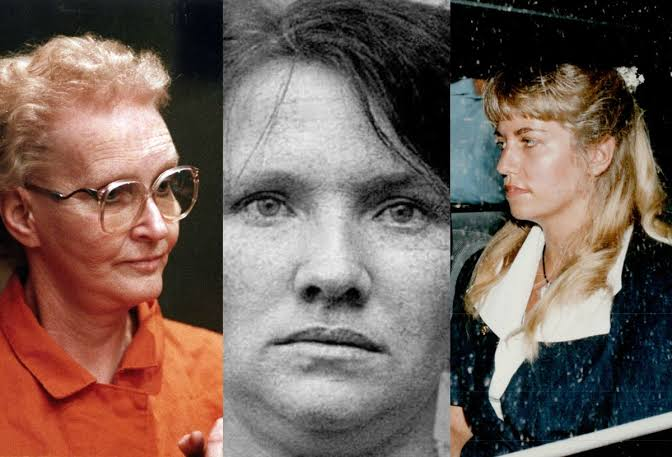
Juana Barraza became one of Mexico’s most notorious female serial killers after elderly women were attacked in Mexico City. A former professional wrestler, Barraza gained victims’ trust before entering their homes, often presenting herself as someone offering assistance. She was convicted in 2008 in connection with multiple murders and received a lengthy prison sentence. Her case drew enormous media attention because investigators initially struggled to identify the offender behind the killings.
Gesche Gottfried and Amy Archer-Gilligan belong to earlier eras when poison could be difficult to detect. Gottfried, a German woman executed in 1831, killed numerous relatives and acquaintances using arsenic. Archer-Gilligan operated a nursing home in Connecticut and was convicted of murder after suspicious deaths generated attention. Her case has often been associated with arsenic poisoning and may have helped inspire elements of the later stage comedy Arsenic and Old Lace.
Why Female Serial Killer Cases Remain So Fascinating
Female serial killer cases attract attention partly because they contradict a common cultural stereotype that repeated predatory murder is almost exclusively male. Cases involving mothers, nurses, caretakers, wives, and boarding-house operators can appear especially disturbing because offenders sometimes exploited positions normally associated with protection or trust. That contrast between public identity and private behavior has made women such as Nannie Doss, Jane Toppan, and Dorothea Puente enduring subjects of criminal history.
However, understanding these crimes requires more than collecting shocking stories. Historical reporting often exaggerates victim numbers, repeats unverified confessions, or turns offenders into entertainment figures while giving victims little attention. A more useful approach examines evidence, criminal opportunity, motive, investigative failures, and social conditions. Studying notorious female serial killers can therefore contribute to a broader understanding of how repeated homicide occurs and why certain offenders avoid detection for extended periods.
Conclusion
The history of female serial killers shows that serial murder has appeared across different countries, centuries, professions, and social environments. Aileen Wuornos used firearms against adult men, while historical poisoners such as Mary Ann Cotton and Gesche Gottfried operated very differently. Healthcare killers exploited professional access, while financially motivated offenders sometimes targeted spouses, tenants, relatives, or dependents. No single psychological profile can accurately describe every woman included in this disturbing category.
The 15 notorious women discussed here remain important to criminal history because their cases demonstrate how trust and opportunity can be manipulated. At the same time, their stories should be approached carefully, particularly when victim counts are disputed or based on suspicion rather than conviction. Accurate reporting helps separate documented facts from true-crime mythology while ensuring that discussions of famous female serial killers do not lose sight of the victims and consequences involved.
Frequently Asked Questions
Who is the most famous female serial killer?
Aileen Wuornos is one of the most famous female serial killers in US history.
Are female serial killers rare?
Yes. Female serial killers are much less common than male serial killers.
Why do female serial killers kill?
Motives may include money, revenge, control, personal conflict, or psychological reasons.
What methods do female serial killers use?
Some have used poison, medication, firearms, strangulation, or other methods.
Who are some notorious female serial killers?
Aileen Wuornos, Belle Gunness, Mary Ann Cotton, Nannie Doss, and Dorothea Puente are well-known examples.
You May Also Read: Sectionalism