

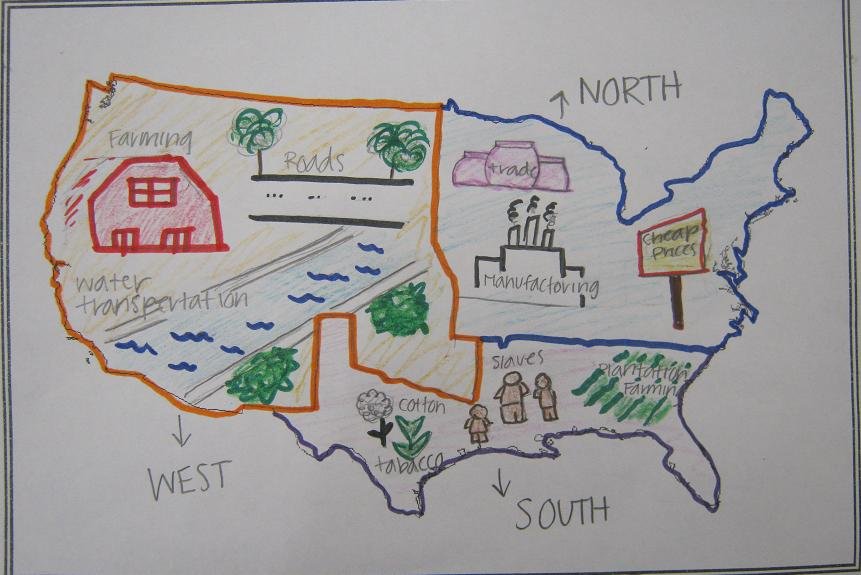
Sectionalism was one of the most important forces shaping American politics during the decades before the Civil War. It developed when people began placing the economic, political, and social interests of their own region above the interests of the United States as a whole. These growing divisions were especially visible among the North, South, and West, where different economies and attitudes created competing priorities.
As the nation expanded, regional disagreements became harder to control. Debates over slavery, tariffs, federal authority, western territories, and political representation repeatedly tested national unity. Although Americans had disagreed over regional interests since the country’s early years, the nineteenth century transformed these disagreements into a serious national crisis. Understanding sectionalism makes it easier to see how political compromise gradually weakened before the Civil War.
What Is Sectionalism?
Sectionalism is strong loyalty to a particular geographic region rather than to the entire country. People influenced by sectional thinking often judge laws, elections, and national policies according to how those decisions affect their own region. In American history, this idea became especially important when northern, southern, and western interests began competing over economic development, slavery, political power, and territorial expansion.
Regional pride does not automatically become sectional conflict. People can value their local traditions while still supporting national unity. The problem develops when regional interests become more important than cooperation with the rest of the country. During the nineteenth century, many Americans increasingly viewed major political questions from a northern or southern perspective, making national solutions more difficult and encouraging distrust between different sections.
What Caused Sectionalism in the United States?
Economic differences played a major role in creating sectionalism. The North became increasingly industrialized, with manufacturing, commerce, cities, and free labor shaping its economy. The South remained heavily agricultural and depended on plantation production supported by enslaved labor. Western settlers had different priorities, including inexpensive land, transportation improvements, and access to newly acquired territories. These contrasting interests often produced conflicting political demands.
Political disagreements strengthened those economic divisions. Americans argued over tariffs, states’ rights, federal authority, slavery, and whether new territories should enter the Union as free or slave states. Every major territorial expansion created new questions about political representation. Instead of solving the underlying conflict, congressional compromises often delayed confrontation, allowing regional resentment to grow until sectional loyalty became increasingly powerful.
North, South, and West Sectional Differences
The North developed around industrial production, commercial activity, transportation networks, and expanding urban centers. Many northern workers participated in a free-labor economy, while political resistance to the spread of slavery gradually became more influential. Northern politicians also frequently supported economic programs that encouraged manufacturing, infrastructure, and commercial development, although political opinions within the region were never completely uniform.
The South followed a different economic path. Plantation agriculture and enslaved labor remained deeply connected to regional wealth and political power. Western communities focused heavily on expansion, farmland, transportation, and new opportunities. Because western territories could eventually become states, both northern and southern leaders competed to influence whether slavery would be permitted there, making the West central to the national sectional struggle.
Major Examples of Sectionalism in American History
The Missouri Compromise was an early major example of sectional conflict because it attempted to preserve a political balance between free and slave states. Later controversies, including the Nullification Crisis and the Compromise of 1850, revealed how deeply regional interests affected national politics. Each compromise temporarily reduced tension but failed to eliminate fundamental disagreements over slavery, federal authority, and regional economic priorities.
The Kansas-Nebraska Act reopened the debate over slavery in western territories and contributed to violent conflict known as Bleeding Kansas. The Dred Scott decision created additional controversy, while John Brown’s raid intensified southern fears of abolitionist violence. By the time Abraham Lincoln won the presidential election of 1860, sectional distrust had become so severe that compromise was increasingly difficult to achieve.
How Slavery Increased Sectionalism
Slavery became the central issue dividing the North and South before the Civil War. The southern plantation economy relied heavily on enslaved labor, while abolitionist movements and opposition to slavery’s expansion gained strength in parts of the North. These differences were economic, moral, political, and constitutional, making slavery much more difficult to resolve than ordinary disagreements over taxes or trade.
Westward expansion intensified the conflict because every new territory raised the question of whether slavery would be permitted there. The answer could change the balance of political power in Congress and influence the future direction of the country. Southern leaders feared becoming politically weaker, while many northerners opposed extending slavery into new lands. These competing goals caused sectionalism to grow throughout the nineteenth century.
How Did Sectionalism Lead to the Civil War?
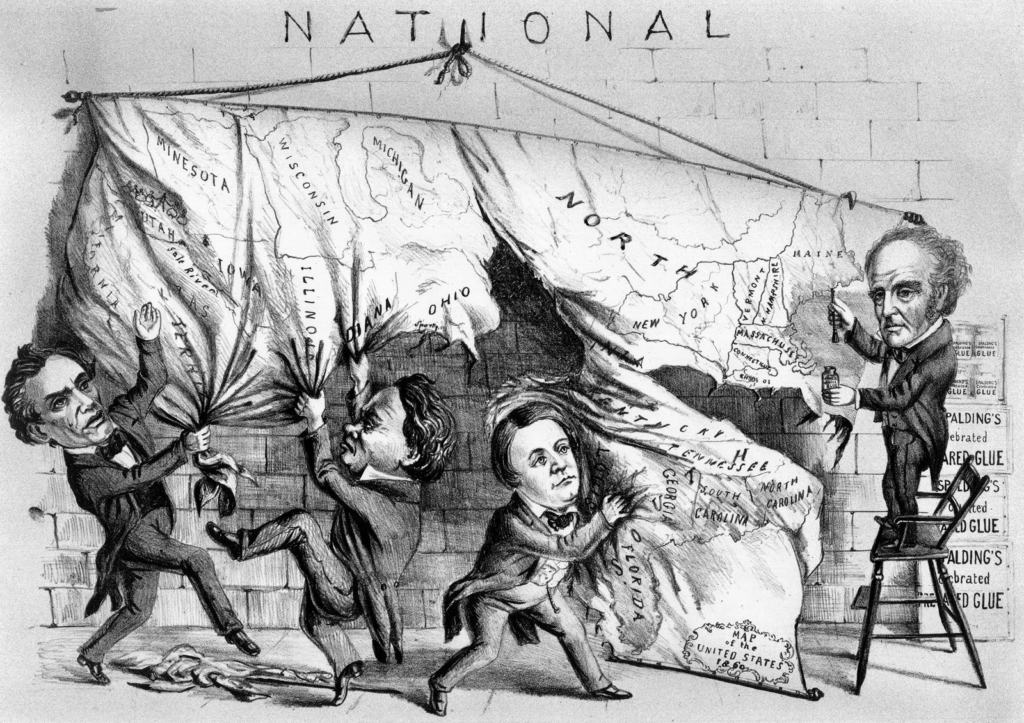
Sectionalism contributed to the Civil War by gradually weakening national loyalty and making political compromise more difficult. Repeated conflicts over slavery, territorial expansion, states’ rights, and federal authority encouraged many Americans to identify more strongly with their region. Political debates increasingly became contests between northern and southern interests instead of disagreements that could easily be resolved through national cooperation.
The election of Abraham Lincoln in 1860 became a critical turning point. Southern political leaders feared that the new administration threatened slavery’s long-term expansion and influence. Several Southern states responded by seceding from the Union and forming the Confederacy. When armed conflict began in 1861, decades of sectional tension had developed into a full national crisis, leading to four years of devastating warfare.
Sectionalism vs Nationalism
Nationalism and sectionalism represent two different forms of political loyalty. Nationalism emphasizes identification with the entire country and encourages citizens to support shared national interests. Sectional loyalty, by contrast, gives greater importance to one region’s political, economic, or cultural concerns. When sectional interests become dominant, citizens may begin viewing national policies primarily according to whether their own region benefits.
Both forces appeared throughout nineteenth-century American history. National pride could increase after wars, economic expansion, or shared political achievements, but major regional disagreements frequently weakened that unity. The debate over slavery proved particularly damaging because northern and southern leaders increasingly believed that protecting their own regional interests was essential. As national political cooperation declined, sectional identity became a powerful force shaping elections and public opinion.
Political Effects of Sectionalism
Sectional conflict transformed American politics by making regional identity increasingly important to voters and political leaders. National parties struggled to maintain support across both northern and southern states because slavery divided their members. Political organizations that once attempted to represent multiple regions gradually weakened, while new coalitions formed around questions involving slavery’s expansion, federal authority, and the future of western territories.
The rise of the Republican Party demonstrated this political transformation. The party attracted many northern voters who opposed expanding slavery into western territories. Southern politicians increasingly believed that national political institutions no longer protected their interests. This growing political separation made compromise even more difficult and helped turn sectional disagreements into a constitutional crisis during the period immediately preceding the Civil War.
Why Sectionalism Matters in American History
Studying sectionalism helps explain why the United States became so divided despite sharing a national government and Constitution. Regional economies developed differently, creating competing priorities regarding labor, trade, land, and political representation. Slavery magnified those differences because it affected economic systems, political power, morality, and individual freedom. Regional disputes therefore became connected to fundamental questions about the nation’s identity and future.
The concept is also essential for students studying the causes of the Civil War. The war did not emerge suddenly from a single disagreement. Instead, decades of political crises, territorial disputes, failed compromises, and growing mistrust weakened national unity over time. Understanding this pattern shows how sectional loyalty can influence political parties, legislation, elections, and eventually the stability of an entire nation.
Conclusion
Sectionalism shaped nineteenth-century America by encouraging people to prioritize regional interests over national cooperation. Economic differences between the industrializing North, agricultural South, and expanding West created important disagreements, but slavery became the most serious source of conflict. Political arguments over territories, representation, federal authority, and states’ rights repeatedly exposed how deeply divided the United States had become.
Compromises delayed confrontation but could not permanently settle the question of slavery or remove regional distrust. By 1860, political unity had weakened dramatically, and Southern secession transformed sectional disagreement into a national emergency. Studying these developments provides a clearer understanding of why the Civil War occurred and why regional political divisions became one of the defining challenges of American history.
Frequently Asked Questions
What does sectionalism mean in history?
Sectionalism means placing the interests of a particular region above the interests of the nation as a whole. In U.S. history, it commonly refers to growing divisions among the North, South, and West.
What were the main causes of sectionalism?
Major causes included slavery, different regional economies, westward expansion, tariffs, states’ rights, federal authority, and political competition between free and slave states.
How did sectionalism lead to the Civil War?
It weakened national unity by intensifying disputes over slavery and political power. Failed compromises, regional distrust, Lincoln’s election, and Southern secession eventually helped turn those divisions into armed conflict.
What is an example of sectionalism?
One major example was the conflict over whether slavery should expand into western territories. Northern and southern leaders fought to protect their regional political and economic interests.
What is the difference between nationalism and sectionalism?
Nationalism emphasizes loyalty to the entire country, while sectionalism places greater importance on one region’s interests, identity, economy, or political priorities.
You May Also Read: Jalisco