

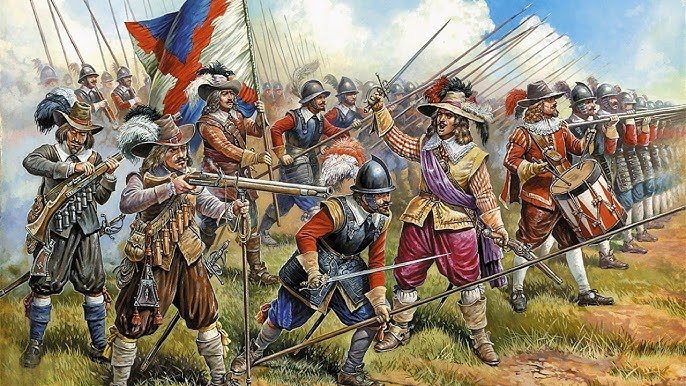
Pike and shot was one of the most significant military developments in European history, representing a major transition from medieval combat methods to early modern warfare. This military system combined heavily armed pikemen with firearm soldiers known as “shot,” creating a balanced battlefield force that could defend against cavalry attacks while also delivering powerful ranged attacks. The combination of traditional weapons and emerging gun technology changed how armies were organized, trained, and deployed during the 16th and 17th centuries.
The rise of pike and shot warfare reflected a period of rapid military transformation. As firearms became more common, commanders needed new strategies to overcome their weaknesses, such as slow reload times and limited accuracy. By combining musketeers with disciplined pikemen, European armies developed formations that could protect firearm troops while maintaining strong defensive capabilities. This approach became one of the defining features of early modern military history.
What Is Pike and Shot Warfare?
Pike and shot was a battlefield formation that combined two different types of infantry soldiers to create a powerful military unit. Pikemen carried long spears called pikes, which were used to defend against enemy infantry and stop cavalry charges. The shot soldiers carried early firearms, including arquebuses and muskets, which allowed armies to attack enemies from a distance before engaging in close combat.
The effectiveness of pike and shot warfare came from the cooperation between these two groups. Early firearms provided greater offensive power, but soldiers using them were vulnerable while reloading. Pikemen solved this problem by creating a protective wall around firearm troops. This combination allowed armies to use both defensive strength and ranged firepower during battles.
Unlike older medieval formations that depended mainly on swords, shields, or cavalry charges, pike and shot introduced a more organized approach to combat. Commanders carefully arranged their soldiers into formations where each group supported the other. This tactical innovation helped armies become more flexible and prepared for changing battlefield conditions.
Origins and Rise of Pike and Shot Tactics
The origins of pike and shot tactics can be traced back to the late 15th and early 16th centuries when European armies began experimenting with new military methods. The increased use of firearms created opportunities for stronger attacks but also created challenges because early guns were slow and difficult to operate. Military leaders needed a solution that combined old and new technologies.
Swiss pikemen played an important role in influencing the development of these formations. Their disciplined use of long pikes demonstrated how infantry could defeat heavily armored opponents and powerful cavalry forces. European commanders later adapted these ideas by adding firearm units to create more balanced armies.
The Spanish military became especially famous for improving pike and shot tactics through the development of the Spanish Tercios. These formations combined pikemen, arquebusiers, and supporting troops into highly organized units. Their success on European battlefields made them one of the most respected military systems of the early modern period.
How Pike and Shot Tactics Worked on the Battlefield
Pike and shot tactics depended on careful planning, discipline, and teamwork between different types of soldiers. A typical formation placed firearm troops near the center or protected areas of the unit, while pikemen surrounded them to provide defense. This arrangement allowed musketeers to fire at approaching enemies while remaining protected from direct attacks.
During combat, firearm soldiers would deliver volleys of shots against enemy formations. Since early muskets required significant time to reload, pikemen played a crucial role in preventing enemy soldiers or cavalry from reaching the vulnerable shooters. Their long weapons created a defensive barrier that could slow or stop enemy advances.
Successful commanders understood that movement and timing were essential. A poorly organized formation could quickly collapse, but a well-trained pike and shot unit could withstand powerful attacks. These tactics required extensive training because soldiers had to move together, maintain formation, and follow battlefield commands under extreme pressure.
Weapons and Equipment Used in Pike and Shot Warfare
The weapons used during the pike and shot era reflected the changing nature of warfare. The pike was one of the most important weapons, often measuring several meters in length. It allowed soldiers to fight from a distance and created defensive formations that were difficult for enemies to break.
Firearms such as the arquebus and matchlock musket became central parts of early modern armies. These weapons were not as advanced as later firearms, but they provided a new level of battlefield power. Soldiers could attack enemies from a distance, forcing commanders to rethink traditional strategies.
Other equipment included swords, daggers, armor, helmets, and protective clothing. While many firearm troops wore lighter equipment to improve mobility, pikemen often used armor because they expected close combat. Together, these weapons created a balanced military system that combined protection, offense, and battlefield control.
Famous Armies and Formations of the Pike and Shot Era
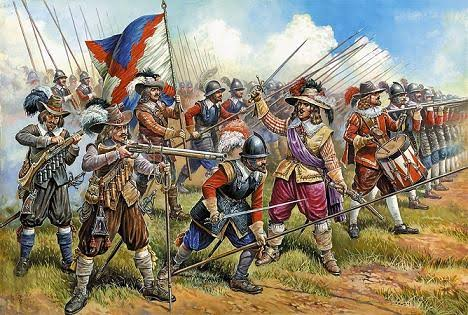
Several European armies became famous for their use of pike and shot formations. The Spanish Tercios were among the most successful examples, dominating many European battlefields during the 16th and early 17th centuries. Their organization, discipline, and training allowed them to defeat many opposing forces.
German Landsknechts also became well-known professional soldiers who used similar combined infantry methods. They were respected for their battlefield skills and ability to operate within large formations. Their colorful appearance and reputation made them one of the most recognizable groups from this era.
The Dutch and Swedish armies later introduced improvements to pike and shot methods. Military leaders such as Gustavus Adolphus of Sweden developed new approaches that increased the effectiveness of firearms and improved battlefield flexibility. These innovations helped influence future military strategies across Europe.
Major Battles and Wars Featuring Pike and Shot Warfare
Pike and shot warfare played a major role in several important European conflicts. The Italian Wars helped spread these tactics as different nations competed for influence and control. Armies discovered that combining firearms with disciplined infantry could provide significant advantages during battles.
The Thirty Years’ War became one of the most important conflicts associated with pike and shot tactics. Armies across Europe relied heavily on these formations, using them in large-scale battles where organization and discipline were essential. The war demonstrated both the strengths and limitations of this military system.
The English Civil War also featured pike and shot formations, with both Royalist and Parliamentarian armies using infantry units equipped with pikes and muskets. These battles showed how the system remained effective but also revealed the growing importance of improved firearms and military organization.
The Decline of Pike and Shot Warfare
The decline of pike and shot warfare occurred as military technology continued to advance. One of the most important changes was the development of the bayonet, which allowed musketeers to defend themselves without requiring separate groups of pikemen. This made armies more flexible and reduced the need for traditional formations.
Improved firearms also changed battlefield strategies. Muskets became more reliable, easier to use, and faster to reload. As firearm technology improved, armies began relying more heavily on shooting power rather than large defensive pike formations.
By the late 17th century, most European armies had moved away from traditional pike and shot systems. However, the tactics and ideas developed during this period continued to influence military planning and the organization of infantry forces.
Importance and Legacy of Pike and Shot Warfare
Pike and shot remains an important topic in military history because it represents a major period of innovation. It showed how armies could successfully combine different weapons and strategies to create stronger battlefield forces. This approach became an early example of combined arms warfare.
The legacy of pike and shot can still be seen in modern military thinking. The idea that different units should support each other remains a fundamental principle in military strategy today. The period also demonstrated how technology can transform warfare and force armies to adapt.
Historians, researchers, and strategy game communities continue to study this era because it provides valuable lessons about leadership, organization, and battlefield decision-making. The story of pike and shot reflects a fascinating period when old traditions and new inventions came together.
Conclusion
Pike and shot was a revolutionary military system that changed European warfare by combining the defensive power of pikemen with the attacking ability of firearm soldiers. It played a major role in the development of early modern armies and influenced military tactics for generations.
Although later inventions eventually replaced these formations, the importance of pike and shot remains clear. It represents a key moment when armies learned to combine different technologies and strategies to achieve greater battlefield success. Its history continues to interest military historians and anyone fascinated by the evolution of warfare.
Frequently Asked Questions
What is pike and shot warfare?
Pike and shot warfare was a military system that combined pikemen with firearm soldiers using weapons like muskets and arquebuses.
When was pike and shot used?
Pike and shot was mainly used from the late 15th century to the late 17th century in European warfare.
How did pike and shot tactics work?
Pikemen protected firearm troops while musketeers attacked enemies with ranged weapons.
Which army was famous for pike and shot tactics?
The Spanish Tercios were among the most famous armies to use pike and shot formations.
What replaced pike and shot warfare?
Improved firearms and the invention of the bayonet eventually replaced traditional pike and shot formations.
You May Also Read: Soul of the South Network